
Top 9 ChatGPT Source Tracking Tools for AI Research (2026)
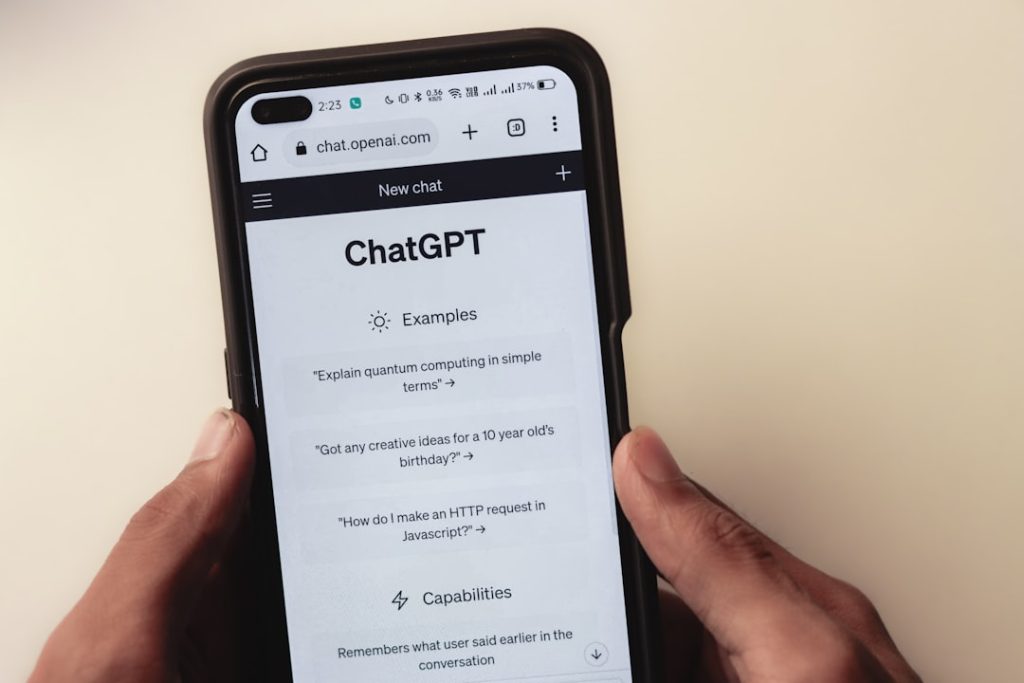
AI research in 2026 is fast, messy, and full of links. ChatGPT can help you read papers, compare claims, and build summaries. But one big question remains: where did that answer come from? Source tracking tools help you follow the trail. Think of them as tiny detectives for your research workflow.
TLDR: The best ChatGPT source tracking tools help you check claims, save citations, and trace answers back to real papers or web pages. For AI research, the strongest stack usually combines a chatbot, a citation manager, a paper search tool, and an experiment tracker. Tools like Elicit, Consensus, Scite, Zotero, and LangSmith are especially useful. Use more than one tool, because no single tool catches everything.
Why source tracking matters
ChatGPT is great at explaining complex ideas. It can make dense research feel friendly. But it can also make mistakes. It may mix sources. It may miss dates. It may sound confident when it should say, “I am not sure.”
That is why source tracking matters. It helps you answer simple but vital questions:
- What source supports this claim?
- Is the source real?
- Is it recent?
- Has another paper challenged it?
- Can I cite it correctly?
Good source tracking turns AI from a magic box into a useful research assistant. Less wizard fog. More receipts.

1. Elicit
Elicit is one of the friendliest tools for research paper discovery. It is built for academic questions. You ask a research question, and it finds papers that may answer it.
Its best feature is structured paper review. It can pull out details like methods, sample size, findings, and limitations. This makes it easier to check whether a ChatGPT summary is based on solid evidence.
Best for: Literature reviews, research questions, paper screening.
Fun tip: Use ChatGPT to draft your question. Then use Elicit to find the papers. Then return to ChatGPT to summarize only the papers you verified.
2. Consensus
Consensus is built around evidence-backed answers. It searches research papers and shows whether studies tend to support a claim. This is helpful when you need more than one paper.
For example, you can ask, “Does retrieval augmented generation improve factual accuracy?” Consensus can surface relevant studies and help you see the pattern.
Best for: Checking scientific claims, finding agreement across studies, quick evidence scans.
Why it is useful with ChatGPT: ChatGPT may give you a neat answer. Consensus helps you see if the literature agrees.
3. Scite
Scite is like a citation gossip network, but useful and polite. It does not only show that a paper was cited. It also shows how it was cited.
Was the paper supported? Was it challenged? Was it only mentioned? This matters a lot in AI research. Some famous papers are cited often because they are important. Others are cited because people are arguing with them.
Best for: Citation context, claim checking, finding disputed papers.
Simple use case: If ChatGPT recommends a paper, check it in Scite before trusting it too much.
4. Zotero
Zotero is the classic citation manager that still deserves a crown. It saves papers, web pages, PDFs, notes, and citation data. It can also create bibliographies.
For source tracking, Zotero is your research pantry. Everything you found can live there. You can tag items, add notes, and organize projects into folders.
Best for: Citation storage, PDF libraries, research organization.
Why it works well with ChatGPT: You can ask ChatGPT to help organize your notes. But Zotero keeps the actual source library under your control.

5. Semantic Scholar
Semantic Scholar is a powerful academic search engine. It is especially strong for computer science and AI papers. It shows citations, references, authors, and related work.
It can help you track a research idea across time. You can start with a major paper. Then you can follow newer papers that cite it. This is perfect for AI research, where fields change quickly.
Best for: Paper discovery, citation trails, AI and computer science research.
Smart move: Use it to find the “family tree” of an idea. ChatGPT can explain the tree after you collect the papers.
6. Perplexity
Perplexity is a web answer engine with visible source links. It is useful when you need fast answers that include references. It works well for current topics, product updates, and recent research news.
It is not a replacement for academic databases. But it is handy for the first pass. It can help you find reports, blog posts, papers, and documentation.
Best for: Web source tracking, current events, quick research trails.
Careful: Always open the links. Do not trust a citation just because it looks tidy.
7. ChatGPT Deep Research and linked sources
By 2026, many researchers use ChatGPT-style research modes that browse, summarize, and cite sources. These tools can speed up early research. They can also help compare many sources at once.
The key is to treat the output as a map, not the final treasure. Follow the links. Check the quotes. Confirm that each source says what the AI claims it says.
Best for: Research planning, source summaries, broad topic scans.
Best practice: Ask for a table with claim, source, quote, date, and confidence level. This makes checking much easier.
8. LangSmith
LangSmith is more technical. It is for people building AI apps with language models. It tracks prompts, outputs, chains, tools, and retrieval steps.
If your research involves building a ChatGPT-powered system, LangSmith helps you see what happened behind the scenes. Which document was retrieved? Which prompt was used? What answer was generated?
Best for: AI app tracing, retrieval testing, debugging model workflows.
Why researchers like it: It gives an audit trail. That is gold when you need reproducible results.
9. Weights & Biases Weave
Weights & Biases Weave helps teams track and evaluate AI applications. It can log prompts, model calls, datasets, and outputs. For AI research, this is helpful when experiments involve many runs.
Imagine testing five prompts across ten models and three document sets. That can become chaos fast. Weave helps keep the chaos in labeled boxes.
Best for: Experiment tracking, model evaluation, AI workflow records.
Use it when: You need to compare outputs and prove how you got them.
How to choose the right tool
You do not need all nine tools. That would be like bringing a spaceship to buy milk. Pick based on your job.
- For literature reviews: Use Elicit, Semantic Scholar, and Zotero.
- For claim checking: Use Consensus and Scite.
- For current web research: Use Perplexity and ChatGPT with linked sources.
- For AI system research: Use LangSmith or Weave.
- For citation storage: Use Zotero.
A simple 2026 research workflow
Here is a clean workflow that works for many AI researchers:
- Ask ChatGPT to define the research question.
- Use Elicit or Semantic Scholar to find papers.
- Use Scite to check citation context.
- Use Consensus to compare evidence.
- Save verified sources in Zotero.
- Ask ChatGPT to summarize only the saved sources.
- If building an AI app, track runs in LangSmith or Weave.
This keeps the fun part fast and the serious part safe.
Final thoughts
Source tracking is not boring. It is your research safety net. It catches weak claims before they become embarrassing slides, shaky papers, or confused strategy docs.
In 2026, the best AI researchers will not be the people who ask ChatGPT the fanciest prompts. They will be the people who know how to verify answers. They will follow links. They will check citations. They will build clear trails from question to source to conclusion.
So let ChatGPT be your cheerful research sidekick. Just make sure it brings receipts.
