
Recent Trends in Industrial Marketing for 2026

Industrial marketing in 2026 is becoming more disciplined, data-driven and commercially accountable. Manufacturers, engineering firms, distributors and industrial technology providers are no longer relying mainly on trade shows, product catalogs and long-standing relationships. Those still matter, but buyers now expect digital clarity, technical credibility, faster responses and measurable business value before they engage with sales.
TLDR: Industrial marketing in 2026 is being shaped by artificial intelligence, account-based strategies, stronger technical content and more transparent proof of value. Buyers are doing more independent research and expect suppliers to provide reliable data, sustainability evidence and practical guidance early in the decision process. The most effective industrial marketers are combining digital tools with human expertise, not replacing one with the other.
1. Account-Based Marketing Becomes the Operating Model
Account-based marketing, often called ABM, is no longer a niche tactic for large enterprise sales teams. In 2026, it is becoming the standard approach for industrial companies that sell complex products, engineered systems or high-value services. Rather than broadcasting general messages to broad markets, companies are prioritizing selected accounts, buying committees and project opportunities.
This shift reflects the reality of industrial purchasing. A single buying decision may involve engineering, procurement, operations, safety, finance and executive leadership. Marketing teams are therefore building content and campaigns around specific account needs, such as reducing downtime, meeting compliance requirements, improving energy efficiency or replacing aging assets.
- Better segmentation by industry, plant type, installed equipment and purchasing maturity.
- Personalized technical content for different stakeholders within the same account.
- Closer alignment between marketing, sales, service and channel partners.
2. Artificial Intelligence Moves from Experiment to Infrastructure
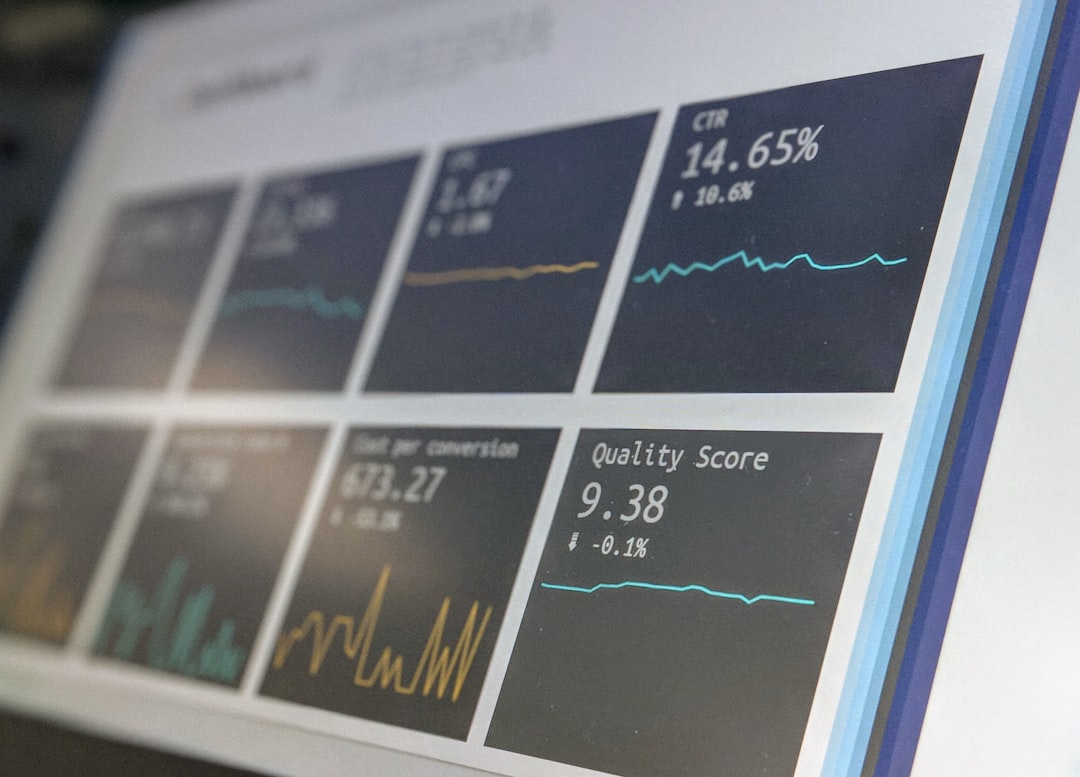
Artificial intelligence is one of the most visible trends in industrial marketing, but the serious change is not simply the use of chatbots or automated copywriting. In 2026, AI is increasingly being used as marketing infrastructure: cleaning data, scoring accounts, identifying intent signals, recommending next actions and helping sales teams prioritize outreach.
Industrial marketers are using AI to analyze website behavior, specification downloads, quote requests, maintenance topics and product comparison patterns. When handled responsibly, this helps companies identify which accounts are actively researching a problem and which contacts may need highly technical information before speaking with sales.
However, trust remains essential. Industrial buyers are cautious about vague claims, especially when equipment performance, safety or regulatory compliance is involved. AI-generated content must be reviewed by subject matter experts. The strongest companies are using AI to improve speed and relevance while keeping engineering accuracy and human accountability at the center.
3. Technical Content Is Becoming a Competitive Advantage
In industrial markets, buyers rarely want motivational slogans. They want evidence. In 2026, high-performing marketing teams are investing more in technical content that helps buyers make confident decisions. This includes application guides, engineering notes, lifecycle cost calculators, maintenance checklists, comparison tables, compliance documentation and product selection tools.
Good technical content does not replace sales engineers; it helps them. When prospects arrive better informed, sales conversations can move faster and focus on fit, risk and implementation. This is especially important as younger engineers and procurement professionals enter decision-making roles. They often prefer to research independently before contacting a supplier.
Credible content typically includes measurable claims, clear assumptions and practical examples. Instead of saying a solution is “high performance,” serious industrial marketers explain under what conditions it performs, what standards it meets and what trade-offs the buyer should consider.
4. Sustainability Marketing Requires Proof, Not Language Alone
Sustainability remains a major theme in industrial marketing, but in 2026 buyers are more skeptical of broad environmental messaging. Many manufacturers face pressure from customers, regulators and investors to reduce energy consumption, emissions, waste and supply chain risk. As a result, they expect suppliers to provide verifiable information.
Marketing teams are working more closely with operations, engineering and compliance departments to communicate sustainability in a practical way. This may include energy usage data, product lifecycle information, repairability, recyclability, emissions documentation and evidence of responsible sourcing.
The key trend is proof-based sustainability communication. Industrial buyers are less impressed by green imagery and more interested in whether a product can reduce compressed air losses, lower heat waste, extend maintenance intervals or help meet reporting requirements. Companies that can connect sustainability to operational savings and compliance will have a stronger position.
5. The Industrial Buyer Journey Is More Digital and Less Linear
The traditional funnel is becoming less accurate for industrial sales. Buyers may attend a webinar, read a technical article, compare suppliers, ask a distributor for input, watch a product demonstration and return months later with a formal request. The journey is digital, fragmented and often anonymous in the early stages.
For marketers, this means that a company’s digital presence must support serious evaluation at every stage. Websites need more than product pages. They need downloadable specifications, application guidance, certifications, installation information, case studies and clear paths to expert support.
Search visibility also remains important, but industrial search behavior is becoming more specific. Buyers are searching by problem, part number, standard, material, operating environment and failure mode. Content that reflects this level of specificity is more likely to attract qualified traffic than generic industry messaging.
6. Video, Virtual Demonstrations and Digital Twins Gain Importance
Industrial products can be difficult to explain with text alone. In 2026, more companies are using video, 3D visualization, virtual demonstrations and digital twins to communicate complex value. These tools are particularly useful for large equipment, automation systems, robotics, process technology and products that are installed in difficult operating environments.
Short videos can show maintenance procedures, safety features or installation steps. Interactive models can help engineers understand dimensions, integration points and operating principles. Digital twins can support customer education, remote selling and after-sales service by showing how assets perform under different conditions.
The best visual content is not overly promotional. It is practical, accurate and designed to reduce uncertainty. When buyers can see how a system fits into their facility or process, they are more likely to engage in a serious commercial conversation.
7. First-Party Data and Privacy Discipline Become Essential
As privacy rules tighten and third-party tracking becomes less reliable, industrial marketers are placing greater emphasis on first-party data. This includes information collected through website interactions, newsletter registrations, webinars, customer portals, service histories and direct sales activity.
Quality matters more than volume. A large database of outdated or poorly classified contacts is less useful than a smaller set of verified accounts with meaningful behavioral and firmographic data. Companies are improving data governance, consent management and integration between customer relationship management platforms, marketing automation tools and service systems.

This trend also supports better customer retention. By understanding service needs, replacement cycles and installed asset history, industrial companies can send more relevant communications and identify opportunities before competitors enter the conversation.
8. Channel Partner Marketing Becomes More Structured
Distributors, systems integrators and representatives remain critical in many industrial sectors. In 2026, manufacturers are investing in more structured channel marketing programs. Instead of simply providing brochures and price lists, they are offering co-branded campaigns, training content, lead-sharing processes, digital asset libraries and performance reporting.
This is important because end customers often experience the supplier brand through the channel partner. If the partner lacks updated product information, technical confidence or digital resources, the manufacturer’s market position can weaken. Strong channel enablement helps create a more consistent customer experience.
What Industrial Marketers Should Prioritize
The most effective industrial marketing strategies for 2026 will be practical and measurable. Companies should avoid chasing every new platform and instead focus on capabilities that improve buyer confidence and sales efficiency.
- Build a reliable data foundation for accounts, contacts, assets and buying signals.
- Create technical content that answers real engineering and procurement questions.
- Use AI carefully to improve relevance, speed and prioritization while maintaining expert review.
- Align marketing with sales and service around target accounts and customer lifecycle value.
- Prove claims with data, case studies, standards and operational outcomes.
Industrial marketing in 2026 is not becoming less human; it is becoming more informed. Digital tools, AI and analytics are raising expectations, but trust still depends on expertise, reliability and evidence. Companies that combine modern marketing systems with deep technical knowledge will be better positioned to win complex industrial business in a cautious and competitive market.
