
3D Printing vs Traditional Prototyping: Which Method Is Better?
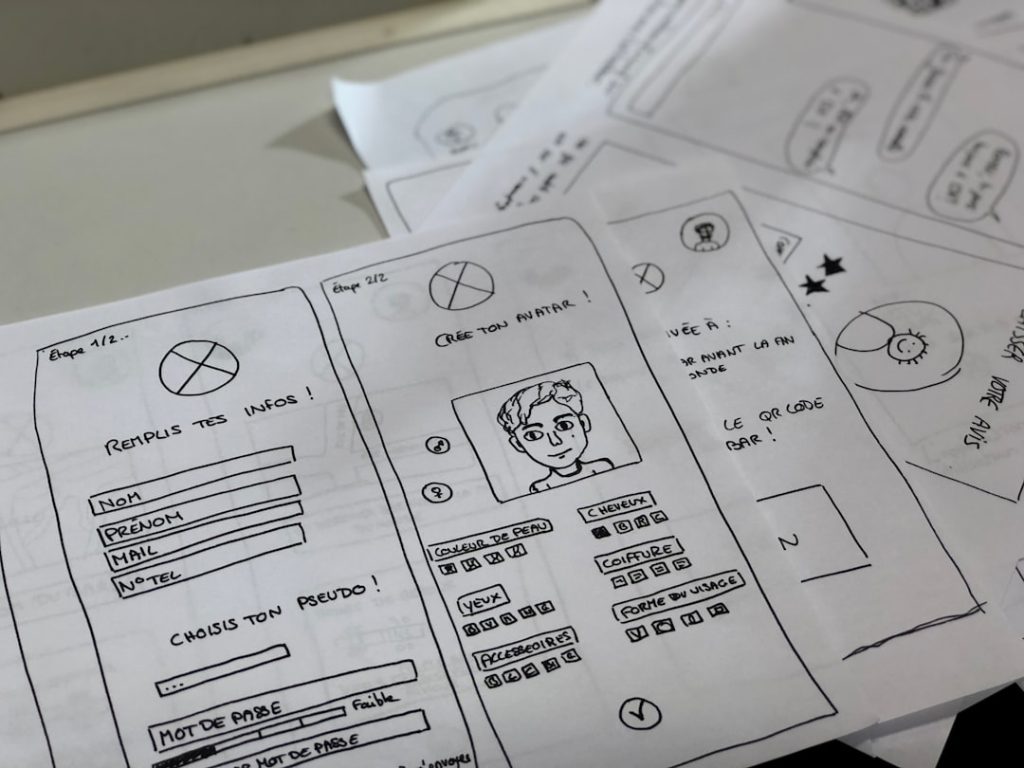
Prototyping is where ideas begin to prove themselves. A sketch may communicate intent, and a CAD model may capture geometry, but a physical prototype reveals how a product feels, fits, functions, and fails. For decades, companies relied on traditional prototyping methods such as CNC machining, hand fabrication, injection mold tooling, casting, and model making. Today, 3D printing, also known as additive manufacturing, has changed the pace and economics of product development, giving designers and engineers a faster route from digital model to physical object.
TLDR: 3D printing is usually better for speed, flexibility, complex shapes, and early design iteration, while traditional prototyping is often better for final material accuracy, strength, surface finish, and production-like testing. The best method depends on the prototype’s purpose: visual testing, functional testing, user feedback, or manufacturing validation. In many modern workflows, the smartest choice is not 3D printing versus traditional prototyping, but a combination of both at different stages.
What Is 3D Printing in Prototyping?
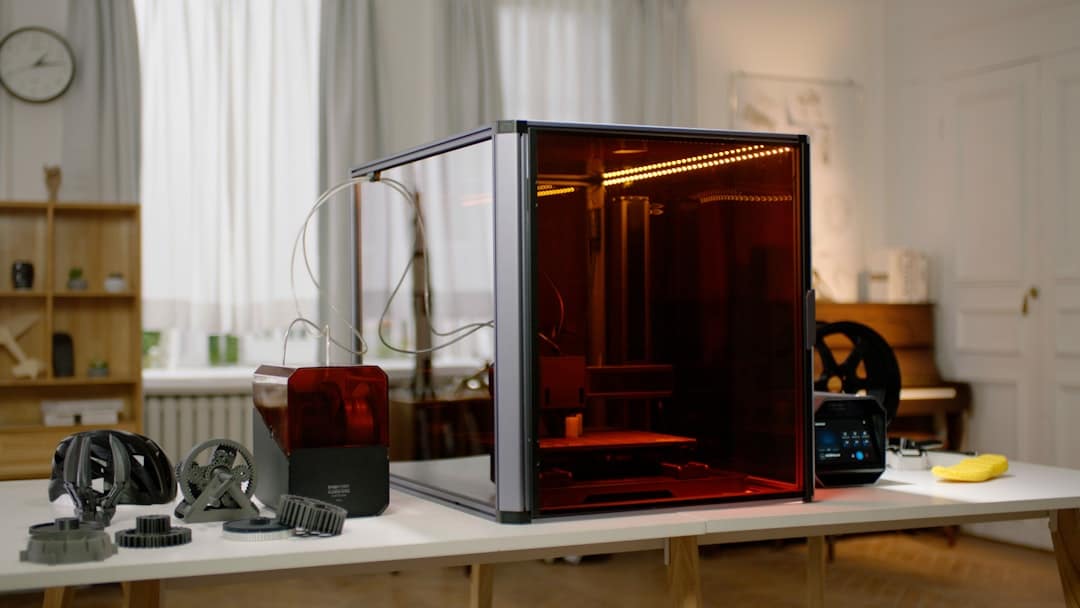
3D printing is an additive process, meaning an object is built layer by layer from a digital file. Instead of cutting material away from a block, the printer deposits, cures, melts, or fuses material only where it is needed. Common technologies include FDM for thermoplastics, SLA for resin parts with fine details, SLS for durable nylon components, and metal additive manufacturing for advanced industrial applications.
This method is especially attractive during the early stages of product development because it makes experimentation easier. A designer can print a handle, test its ergonomics, modify the CAD file, and print another version the same day. That kind of rapid iteration is difficult to match with older fabrication methods.
What Is Traditional Prototyping?
Traditional prototyping refers to a broad set of subtractive, formative, and manual processes. These include CNC machining, laser cutting, vacuum forming, urethane casting, sheet metal fabrication, woodworking, clay modeling, and prototype injection molding. In these methods, parts are commonly cut, shaped, molded, assembled, or finished by skilled technicians using shop tools and industrial equipment.
Traditional techniques have a long history because they are reliable and, in many cases, closely resemble final manufacturing. For example, a CNC machined aluminum prototype may behave much like a production aluminum part. A cast urethane component may better simulate the feel of molded plastic than a basic desktop 3D print. This makes traditional prototyping valuable when performance, finish, and production realism matter.
Speed: 3D Printing Usually Wins Early
When speed is the priority, 3D printing has a clear advantage. Once a digital model is ready, a prototype can often be produced within hours. There is no need to create tooling, write complex machining programs for every detail, or wait for molds to be fabricated. This is why 3D printing is commonly described as rapid prototyping.
Traditional prototyping can also be fast, especially when performed by experienced model makers or machine shops. Simple laser cut parts, foam models, or CNC components may be completed quickly. However, as geometry becomes more complex or tooling becomes necessary, lead times increase. A machined prototype could take days, while a mold-based prototype might take weeks.
For startups, product designers, and engineering teams working under tight deadlines, this difference can be decisive. Faster prototypes mean faster feedback, fewer assumptions, and shorter development cycles.
Cost: It Depends on Quantity and Complexity
Cost comparison is not always straightforward. For a single prototype or a small number of parts, 3D printing is often cheaper. It avoids expensive setup, custom tooling, and extensive manual labor. A complex part with internal channels, organic curves, or lattice structures may cost only modestly more to print than a simple blocky shape.
Traditional prototyping can become expensive when each part requires machine programming, fixture setup, skilled manual finishing, or mold production. However, for larger quantities or simple geometries, traditional methods may become more economical. CNC machining multiple identical parts from standard material can be efficient, and casting can reduce per-part cost once the mold exists.
- 3D printing is usually cost-effective for: one-off models, complex designs, design iterations, and early concept validation.
- Traditional prototyping is often cost-effective for: simple parts, larger prototype batches, high material accuracy, and production-like samples.
Design Freedom: Additive Manufacturing Has the Edge
One of the most exciting advantages of 3D printing is design freedom. Because parts are built layer by layer, designers can create shapes that would be difficult or impossible to manufacture with conventional processes. These include internal channels, lightweight lattice structures, complex curves, and consolidated assemblies that reduce the number of separate components.
This freedom is especially useful in aerospace, medical devices, robotics, consumer products, and industrial design. A designer can explore shapes based on function rather than being limited too early by manufacturing constraints. In concept development, that can lead to more innovative solutions.
Traditional prototyping, by contrast, often requires designers to think about access, tool paths, draft angles, parting lines, and assembly steps. These limitations are not always bad. In fact, they can help teams design products that are easier to manufacture at scale. But during early exploration, they can slow creativity.
Material Accuracy: Traditional Methods Often Perform Better
While 3D printing offers many material options, traditional prototyping often provides better access to final production materials. If the final product will be made from aluminum, stainless steel, acetal, ABS, silicone, or a specific engineering plastic, a traditional prototype can often be created using that exact material or a very close match.
3D printed materials may imitate production materials, but they do not always behave the same way. A printed nylon part may have different strength depending on print orientation. Resin prints can be brittle or sensitive to sunlight. FDM prints may show layer lines and anisotropic strength, meaning they are stronger in one direction than another.
This matters when prototypes are used for stress testing, thermal testing, wear evaluation, or regulatory validation. For an early ergonomic sample, 3D printed material might be perfectly adequate. For a part that must survive mechanical load, heat, vibration, or chemical exposure, traditional prototyping may be the safer choice.
Surface Finish and Appearance
Surface quality is another area where the better method depends on the goal. Many 3D printed parts require sanding, coating, polishing, or painting to achieve a production-like finish. SLA printing can produce very smooth and detailed parts, but other processes, such as FDM, often leave visible layer lines.
Traditional prototyping can deliver excellent surface finishes, especially through CNC machining, model making, casting, and finishing processes. If a prototype is intended for a trade show, investor presentation, user testing session, or photography, surface quality can strongly influence perception. A product that looks polished may receive more useful feedback because users respond to it as a real object rather than a rough experiment.
That said, appearance models are commonly made with both approaches. A 3D printed form can be filled, painted, and finished to look like an injection molded product. The main question is how much finishing time and budget are available.
Functional Testing: Match the Method to the Test
A prototype should be judged by what it needs to prove. If the goal is to test whether a product fits in someone’s hand, snaps into a package, or fits inside an assembly, 3D printing is often ideal. If the goal is to test strength, fatigue, sealing, friction, or heat resistance, traditional prototyping may provide more reliable results.
- Concept prototype: 3D printing is usually best because it is fast and inexpensive.
- Visual prototype: Either method can work, depending on finish requirements.
- Functional prototype: Choose based on material, strength, and tolerance needs.
- Pre-production prototype: Traditional methods often become more important because they can mimic manufacturing conditions.
The mistake many teams make is expecting one prototype to answer every question. A rough 3D print may not predict final durability, and a costly machined sample may be unnecessary for testing basic proportions. Smart prototyping uses the right level of fidelity at the right time.
Tolerances and Precision
Precision varies widely across both categories. Industrial 3D printers can create accurate parts, but tolerances depend on the machine, material, geometry, and post-processing. Some printed parts may warp, shrink, or require support removal that affects final dimensions.
CNC machining and other traditional processes can achieve very tight tolerances, especially for metal and engineering plastic parts. When a prototype must fit precisely with bearings, seals, threads, electronic components, or mechanical assemblies, traditional machining may be preferred. However, for many consumer product prototypes, modern 3D printing is accurate enough to evaluate fit and form.
Sustainability and Waste
3D printing is often praised for reducing waste because it adds material only where needed. This can be true, especially compared with machining, where material is cut away from a larger block. The ability to print lightweight structures can also reduce material use.
However, sustainability is more complicated than material waste alone. Failed prints, support structures, resin handling, energy usage, and limited recyclability of some materials can reduce the environmental advantage. Traditional methods may create more scrap, but they may also use recyclable metals, durable tooling, or efficient batch processes.
The greener choice depends on the material, machine efficiency, production volume, and whether the prototype prevents waste later by improving the final design.
When 3D Printing Is the Better Choice
Choose 3D printing when the project needs speed, flexibility, or design exploration. It is especially useful when ideas are still changing and the team expects to create several versions before selecting a direction.
- Early concept models
- Ergonomic studies
- Complex geometries
- Low-volume prototypes
- Internal channels or lightweight structures
- Fast design iteration and user feedback
For many teams, 3D printing lowers the psychological cost of experimentation. When prototypes are quick and affordable, people are more willing to test bold ideas, discover problems early, and make improvements before committing to expensive decisions.
When Traditional Prototyping Is the Better Choice
Traditional prototyping is better when a prototype must closely represent the final product in material, strength, finish, or manufacturing process. It is also valuable when precise tolerances are essential or when the prototype will undergo demanding functional testing.
- Production-like material testing
- High strength mechanical parts
- Metal components with tight tolerances
- Presentation models requiring premium finish
- Pre-production validation
- Prototype tooling and pilot manufacturing

The Hybrid Approach: Often the Best Answer
In real product development, the winning strategy is often a hybrid workflow. A team may start with 3D printed concept models, then move to higher-resolution prints for user testing, then use CNC machining or casting for functional validation, and finally create prototype tooling for pre-production samples.
This approach uses each method where it is strongest. 3D printing accelerates learning in the uncertain early stages, while traditional prototyping brings realism and reliability as the design matures. The result is a faster, smarter, and more evidence-based development process.
So, Which Method Is Better?
There is no universal winner. 3D printing is better for rapid iteration, creative freedom, complex forms, and early-stage affordability. Traditional prototyping is better for material accuracy, tight tolerances, refined finishes, and production-level testing. The best method depends on what you need to learn from the prototype.
If the question is, “Does this idea make sense?” 3D printing is often the better starting point. If the question is, “Will this part perform like the final product?” traditional prototyping may provide the stronger answer. The most successful teams understand that prototypes are not just objects; they are tools for decision-making. Choosing the right prototyping method means choosing the clearest path to better decisions, fewer mistakes, and a stronger final product.
