
5 Best Proxies for Ad Verification in 2026
Digital advertising keeps expanding across channels, markets, and devices, which makes campaign verification harder to manage consistently at scale. IAB reports that digital advertising revenue reached nearly $300 billion in 2025, the highest level in the report’s history. As spend grows, so does the need to verify where ads appear, how they render, and whether delivery matches the intended geography and audience.
That is where proxies become useful. Ad verification often requires teams to check campaigns from outside their own office network, across multiple regions, and under conditions that more closely resemble normal user traffic. The stronger the proxy layer is, the easier it becomes to validate regional delivery, investigate suspicious placements, and repeat QA without relying on one visible IP source.
Why Is Proxy Infrastructure Important for Ad Verification?
Proxy infrastructure matters because ad verification becomes less reliable when every check comes from the same location and the same identity. A proper proxy layer helps teams inspect placements in the markets where campaigns are meant to appear, while reducing the chance that monitoring traffic is blocked, filtered, or treated differently from real users.
A few situations make that especially important:
- Geo-targeted delivery: Campaigns often behave differently by country, city, or network, so verification needs access from those markets.
- Fraud review: Incorrect-geo traffic, spoofed environments, and suspicious placements require independent checks outside one fixed network.
- Repeatable QA: Verification is rarely a one-time task, especially for agencies and larger AdTech teams.
- Cross-environment monitoring: Open web, mobile, and AdTech workflows do not behave the same way, so the access layer has to support different testing conditions.
How Do Proxies Help Detect Ad Fraud and Incorrect Geo Delivery?
Proxies help by showing what a campaign actually looks like in the locations and environments it targets. That makes them useful not only for checking whether an ad appears, but also for validating where it appears, how it loads, and whether the surrounding delivery path looks suspicious.
Incorrect Geo Delivery
Geo mismatches are one of the clearest problems proxies can reveal. If a campaign is supposed to run in one market but behaves differently in another, region-accurate access helps teams confirm whether the issue comes from bad targeting, inventory quality, or delivery drift.
Hidden or Filtered Delivery
Fraudsters do not always show the same thing to every visitor. Residential and mobile proxies help verification traffic look less like obvious monitoring behavior, which makes suspicious placements and filtered delivery easier to inspect under more realistic conditions.
Mobile and CTV Checks
Verification becomes more complex when delivery depends on app environment, carrier context, or connected-device behavior. That is why mobile-aware proxy products and more environment-specific targeting controls are increasingly relevant for ad verification workflows.
When Do Agencies and Brands Need Enterprise Proxy Solutions?
Enterprise proxy infrastructure becomes more useful when ad verification stops being an occasional check and turns into a structured workflow across many campaigns, markets, or internal teams. At that point, the challenge is not only getting another IP. It is keeping traffic organized, repeatable, and reliable across multiple verification streams.
It usually makes the most sense in the following cases:
- Multi-market campaigns: Regional verification gets harder when one team needs to validate many countries or states at once.
- Client or campaign separation: Agencies often need cleaner allocation by account, client, or workflow so one verification stream does not interfere with another.
- Mobile and app review: Carrier-sensitive or mobile-only delivery often needs more specialized proxy support than standard desktop checks.
- Ongoing fraud investigation: Repeated link checks, placement reviews, and regional audits benefit from stronger controls and more predictable support.
How Do Proxy Services Compare for Ad Verification in 2026?
For ad verification, the most useful comparison is not the provider with the biggest headline claim, but the one that best fits core verification tasks such as localized delivery checks, repeatable audits, mobile visibility, suspicious-link review, and controlled multi-market QA.
Comparison Table: Leading Proxy Services for Ad Verification
| Provider | Verification Focus | Best Environments | Geo Precision |
| 1. Live Proxies | Multi-market QA and ad checks | Open web, mobile | Country-level globally, U.S. state-level zones, ASN |
| 2. SOAX | Localized delivery validation | Open web, mobile, in-app | Country, city, ISP |
| 3. Oxylabs | Global campaign QA and compliance checks | Open web, mobile | Country, city, ASN, ZIP |
| 4. Decodo | AdTech verification and suspicious-link checks | Open web, mobile, AdTech | Country, city, ZIP, ASN, carrier |
| 5. IPRoyal | Stable recurring reviews and long-session checks | Open web, mobile | Country, city, product-dependent |
1. Live Proxies
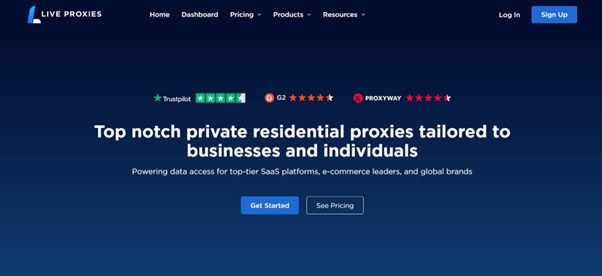
Live Proxies is a private proxy provider focused on residential and mobile infrastructure for individual users and businesses. Its enterprise offering highlights millions of IPs across 55+ countries, an average 0.5-second response time, a 99.97% success rate, and zone-based allocation. This makes it a practical residential proxy option for heavier verification and monitoring workflows.
For ad verification, Live Proxies is especially useful when checks need to be separated by region, campaign, or internal workflow instead of running through one shared pool. Grouped zones, sticky sessions, and traffic separation support recurring delivery checks, compliance reviews, and broader market-by-market QA, while the platform’s enterprise proxy solutions make that setup easier to scale across larger verification programs.
Available products:
- Rotating Residential IP Proxies
- Rotating Mobile IP Proxies
Ad verification use cases:
- Multi-market delivery checks where proxy traffic needs to be organized by group or purpose.
- Recurring placement reviews and compliance checks that benefit from sticky sessions, zoning, and dedicated support.
2. SOAX
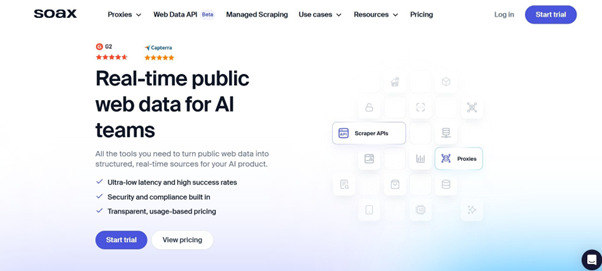
SOAX is a large proxy platform with a strong residential footprint and a clear focus on geo-targeting. Its residential network includes over 155M home IPs, while the wider platform promotes more than 191M clean IPs, 195+ geolocations, unlimited connections, and uptime above 99.9%.
That scale matters in ad verification because localized checks often need more than country-level access. SOAX is particularly relevant for teams validating regional ad delivery, ISP-sensitive placements, and mobile or in-app environments where city- and network-level precision can change what the campaign actually shows.
Available products:
- Residential proxies
- Mobile proxies
- ISP proxies
Ad verification use cases:
- Localized ad delivery checks where the city, region, or ISP context affects what is shown.
- In-app and mobile campaign reviews that need mobile-specific traffic rather than generic desktop-style access.
3. Oxylabs
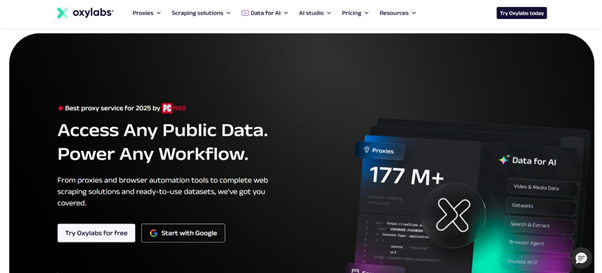
Oxylabs is one of the most established enterprise-focused proxy providers in the market. Its platform currently promotes 175M+ residential IPs and 2M datacenter IPs, alongside a broader stack that includes Web Unblocker, Web Scraper API, and other data-collection tools built for larger operational use.
In the context of ad verification, Oxylabs is strongest when the workflow is broad, multi-market, and tied to larger compliance or campaign QA programs. The company explicitly positions residential proxies as a good fit for ad verification because they provide geo-located, user-like traffic that helps teams monitor ads without being blocked too easily.
Available products:
- Residential proxies
- Mobile proxies
- ISP-style fresh proxies
- Dedicated proxies
Ad verification use cases:
- Global campaign QA and geo-restricted ad review across many markets.
- Repeated compliance and delivery checks that benefit from broader proxy coverage and longer-session options.
4. Decodo
Decodo positions itself as a proxy platform built for scale, precision, and flexible integration. Its network includes 115M+ real-user IPs across 195+ locations, with rotating and sticky sessions, ASN- and ZIP-level targeting, and strong uptime and success rate claims across its residential infrastructure.
For ad verification, Decodo is especially relevant because it speaks directly to AdTech use cases rather than only generic proxy use. Its materials emphasize misleading ad detection, suspicious link checks, and device or mobile carrier targeting, which makes it a strong fit for teams that need more detailed controls in mobile-heavy or fraud-sensitive verification workflows.
Available products:
- Residential proxies
- Mobile proxies
- ISP proxies
- Dedicated proxies
Ad verification use cases:
- Misleading-ad detection and suspicious-link checks in AdTech workflows.
- Mobile-heavy and region-sensitive reviews that benefit from ZIP, ASN, carrier, or device-aware targeting.
5. IPRoyal
IPRoyal is a flexible proxy provider with a broad mix of residential, ISP, static residential, and mobile products. Its residential network covers over 32M IPs in 195+ locations, while its ISP line adds 500K+ unique IPs and unlimited traffic, and IPRoyal also promotes 99.9% uptime across its service.
That mix makes IPRoyal a practical option for ad verification teams that need both regional access and continuity. Its ad-verification positioning focuses on viewing geo-restricted ads and content under more realistic conditions, while its ISP and static residential products are useful for recurring reviews, redirect tracing, and longer verification flows that benefit from a steadier identity.
Available products:
- Residential proxies
- ISP proxies
- Static residential proxies
- Mobile proxies
Ad verification use cases:
- Geo-restricted ad checks where teams need to see what users in specific locations actually see.
- Recurring campaign reviews and longer-session verification flows where a stable identity is useful.
Which Ad Verification Tasks Benefit Most From Proxy-Based Access?
Proxy-based access is most useful when a team has to inspect campaign behavior from outside its own network and under more realistic conditions. The more the workflow depends on geography, device context, or repeat checks, the more valuable proxies become.
A few tasks stand out most clearly:
- Regional placement checks: Teams can verify whether creatives actually appear in the intended countries, cities, or network environments.
- Fraud and spoofing review: Proxies help inspect suspicious placements, redirects, or masked delivery under less obvious monitoring conditions.
- Mobile and in-app QA: Mobile proxies and carrier-aware targeting are useful when app or network context affects delivery.
- Recurring campaign audits: Sticky, ISP, or static options can support repeated verification from a more stable identity.
What Should Teams Check Before Choosing Proxies for Ad Verification?
The right choice usually comes down to how well a provider matches the verification workflow, not how broad its marketing claims sound. Teams should look at whether the proxy layer can support real campaign checks across location, environment, and repeatability requirements.
Geo Precision
Country-level targeting can be enough for broad checks, but city, ZIP, ISP, ASN, or carrier precision becomes more important when delivery patterns vary by local market or device context. This is especially relevant when teams need to confirm whether a campaign is appearing correctly in a specific city, network environment, or mobile setting rather than across a whole country.
Session Behavior
Verification teams often need both rotating and stable access. Rotating sessions helps with broader market checks, while sticky or long-session setups are better for redirect tracing, repeated loads, and longer QA flows. The more often a team needs to repeat the same check under similar conditions, the more important session control becomes.
Product Mix
Open web checks, mobile QA, and recurring audits do not always need the same traffic profile. A provider with more than one relevant product type is often easier to use as verification expands. That flexibility matters when a team starts with simple regional checks but later needs mobile, static, or longer-session options for more specialized reviews.
Conclusion
The best proxies for ad verification in 2026 help teams validate campaigns under realistic conditions without sacrificing repeatability or location accuracy. For most workflows, residential traffic stays at the center, while mobile, static residential, and ISP options become more useful when the job needs more specificity, continuity, or control.
Live Proxies, SOAX, Oxylabs, Decodo, and IPRoyal each fit a different part of that process. Some are stronger for localized checks, some for deeper AdTech reviews, and some for broader enterprise QA. The right choice depends on whether the priority is regional delivery validation, mobile visibility, recurring audits, or a more structured verification workflow that can scale cleanly.
