
Akeyless vs Vault: Evaluating Secrets Management, Security Architecture, Scalability, and Operational Complexity
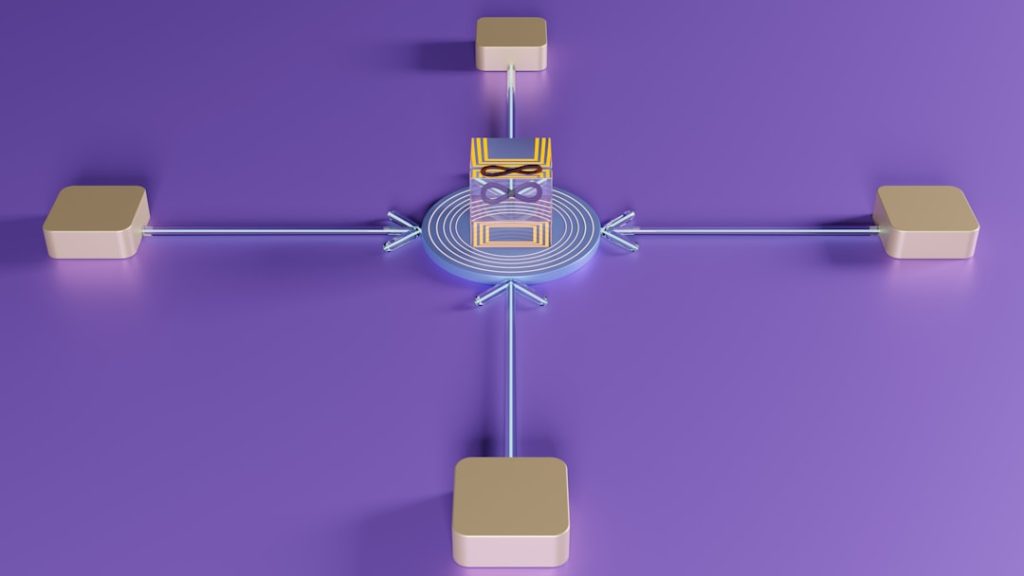
Secrets management has become a foundational discipline for modern engineering teams. As applications spread across cloud platforms, Kubernetes clusters, CI/CD pipelines, edge environments, and developer laptops, organizations need a reliable way to store, rotate, audit, and deliver sensitive values such as API keys, database credentials, certificates, tokens, and encryption keys. Two names often appear in this conversation: Akeyless and HashiCorp Vault. Both aim to solve the same core problem, but they take meaningfully different approaches to architecture, operations, scalability, and security ownership.
TLDR: Akeyless is generally more attractive for teams that want a cloud-native, lower-maintenance secrets management platform with strong automation and distributed access capabilities. Vault is highly flexible, widely adopted, and powerful, but it often requires more operational expertise, especially when self-hosted at scale. The best choice depends on whether your organization prioritizes managed simplicity and rapid deployment or deep control and customization. For many teams, the decision is less about features alone and more about how much infrastructure responsibility they want to own.
Why Secrets Management Matters
In older environments, secrets were often stored in configuration files, environment variables, shared password managers, or even source code repositories. That approach is dangerous in today’s software landscape. A leaked credential can give an attacker direct access to production databases, cloud control planes, payment systems, or internal APIs. Worse, static credentials often remain valid for months or years, giving attackers a long window of opportunity.
Modern secrets management tools reduce this risk by centralizing sensitive data, enforcing access policies, rotating credentials, generating dynamic secrets, and providing audit trails. The goal is not simply to “hide passwords,” but to establish a controlled, observable, and automated trust layer across infrastructure.

Akeyless and Vault at a Glance
Akeyless is a SaaS-first secrets management and privileged access platform designed around a distributed cloud security model. It provides capabilities such as static secrets, dynamic secrets, encryption key management, certificate automation, remote access, and zero standing privilege workflows. Akeyless emphasizes operational simplicity, fast onboarding, and centralized control across hybrid and multi-cloud environments.
HashiCorp Vault is one of the best-known secrets management platforms in the industry. It can be self-hosted, deployed in Kubernetes, run across cloud environments, or consumed through HashiCorp’s managed offerings. Vault is admired for its extensibility, plugin ecosystem, dynamic secrets engines, policy model, and broad integrations. It is especially popular among infrastructure and platform teams that value control and customization.
Security Architecture: Different Philosophies
The architectural difference between Akeyless and Vault is one of the most important evaluation points. Vault traditionally follows a model where the Vault cluster is the security authority. It stores encrypted secrets, manages policies, handles authentication, and must be carefully initialized, unsealed, backed up, replicated, monitored, and upgraded. In self-hosted deployments, your team is responsible for hardening and operating the Vault infrastructure.
Akeyless uses a different model based on a cloud-native service with distributed cryptographic architecture. One of its key concepts is that sensitive cryptographic operations can be separated in a way that reduces the provider’s ability to directly access customer secrets. Akeyless also supports gateways that can be deployed in private networks, enabling applications to retrieve secrets without exposing internal systems directly to the public internet.
For security teams, the question becomes: Do we want to operate the core security control plane ourselves, or do we want to consume it as a managed service with strong isolation controls? Vault appeals to organizations that want maximum infrastructure control. Akeyless appeals to organizations that want strong security outcomes without carrying as much operational burden.
Static Secrets, Dynamic Secrets, and Rotation
Both platforms support static secret storage, but the real value of modern secrets management comes from dynamic secrets and automated rotation. Static secrets are values that exist until changed, such as an API token or password. Dynamic secrets are generated on demand and often expire automatically after a short time.
Vault is well known for dynamic secrets. It can generate temporary credentials for databases, cloud platforms, SSH access, PKI certificates, and other systems. Its secrets engines are powerful and mature, and advanced teams can build sophisticated workflows around them.
Akeyless also supports dynamic secrets for common infrastructure targets, including databases, cloud IAM systems, Kubernetes, and remote access use cases. Its strength is often in making these workflows easier to adopt without requiring the same level of backend configuration and cluster maintenance. For organizations trying to reduce long-lived credentials quickly, that simplicity can matter as much as raw capability.
- Static secrets: Useful for legacy systems, API keys, and configuration values that cannot easily be generated dynamically.
- Dynamic secrets: Better for reducing exposure because credentials are created on demand and expire automatically.
- Rotation: Essential for limiting damage if a secret is leaked or copied.
- Auditability: Critical for understanding who accessed what, when, and from where.
Authentication and Access Control
Secrets management is only as strong as its identity and policy model. Vault provides a rich policy language and many authentication methods, including Kubernetes, AppRole, LDAP, OIDC, cloud IAM, GitHub, and more. This flexibility is one of Vault’s greatest strengths. Teams can model access in highly specific ways, but they must also design and maintain those policies carefully.
Akeyless also integrates with common identity providers and cloud-native authentication methods. It tends to emphasize centralized policy administration and simplified access flows across environments. This can be helpful for organizations with small platform teams or those that want to standardize access across multiple clouds, Kubernetes clusters, and developer workflows.
The difference is not that one has access control and the other does not; both do. The difference is the experience of managing access at scale. Vault can be extremely precise, but that precision can introduce complexity. Akeyless may be easier to operationalize for teams that prefer managed workflows and a more unified administrative experience.

Scalability and High Availability
Scalability is where operational expectations diverge sharply. Vault can scale very well, but scaling Vault requires thoughtful architecture. Teams must consider storage backends, performance replication, disaster recovery replication, unseal mechanisms, cluster sizing, network latency, monitoring, backups, and upgrade strategies. In enterprise environments, these are manageable tasks, but they require experienced operators.
Akeyless is designed to reduce much of that burden by offering a managed control plane. Customers can deploy gateways close to workloads for performance, private network access, and resilience while relying on the SaaS platform for centralized management. This model can simplify multi-region and multi-cloud growth, especially for organizations that do not want to become experts in operating a secrets management cluster.
For a small team, the ability to avoid day-two operations can be a major advantage. For a very large organization with strict internal platform standards, Vault’s self-hosted model may be preferred because it allows fine-grained control over deployment topology, storage, networking, and compliance boundaries.
Operational Complexity
This is often the deciding factor. Vault is powerful, but power comes with responsibilities. Running Vault well means managing initialization, seal and unseal processes, root tokens, storage consistency, TLS, upgrades, disaster recovery, audit devices, policy sprawl, token lifetimes, and secrets engine configuration. Many outages involving secrets platforms are not caused by missing features; they are caused by operational mistakes.
Akeyless reduces much of that complexity by shifting the burden of platform operations to the vendor. Teams still need to design policies, manage integrations, and follow security best practices, but they do not typically need to operate the same kind of highly available core cluster. This can speed up adoption and free platform engineers to focus on application enablement rather than infrastructure maintenance.
That said, managed does not mean “no responsibility.” Organizations still need to think carefully about identity provider configuration, break-glass access, network paths, gateway deployment, logging, compliance requirements, and vendor risk. The operational model is lighter, not nonexistent.
Integration Ecosystem
Vault has a large and mature ecosystem. It integrates with Terraform, Kubernetes, Consul, Nomad, major clouds, databases, CI/CD systems, and many third-party tools. Its API and plugin architecture make it attractive for teams that want to build custom workflows. In environments already standardized on HashiCorp tools, Vault can feel like a natural extension of the platform.
Akeyless also supports major DevOps and cloud-native ecosystems, including Kubernetes, CI/CD tools, identity providers, cloud platforms, databases, and infrastructure automation workflows. It is particularly appealing when organizations want secrets management combined with adjacent capabilities such as just-in-time access, certificate management, and remote access controls from a single platform.
The practical question is not simply, “Which tool has more integrations?” Instead, ask: Which tool integrates more cleanly with the systems we actually use every day?
Compliance, Auditing, and Governance
Both Akeyless and Vault can support compliance initiatives by centralizing access, producing audit logs, enforcing least privilege, and reducing uncontrolled credential sharing. Vault gives teams deep control over audit devices and log destinations, which can be valuable in highly regulated environments. Akeyless provides centralized auditability through its managed platform and can simplify reporting across distributed environments.
For compliance-heavy organizations, evaluation should include data residency, encryption model, administrative access boundaries, audit log retention, export options, single sign-on support, approval workflows, and evidence collection. Secrets management affects many compliance frameworks, but the tool alone does not create compliance. Good governance comes from consistent policy design, review processes, monitoring, and incident response planning.

Cost Considerations
Cost comparisons can be tricky. Vault open source may appear inexpensive at first, especially if a team can run it internally. However, the true cost includes engineering time, infrastructure, high availability design, monitoring, upgrades, security reviews, and incident response. Vault Enterprise and managed Vault options add licensing or subscription costs but may reduce some operational burden.
Akeyless typically follows a commercial SaaS model, so costs are more explicit. The benefit is predictability and reduced internal operations. For many companies, paying for a managed platform is cheaper than dedicating senior platform engineers to maintaining a mission-critical Vault deployment. For others, especially those with mature infrastructure teams, self-hosting Vault may align better with existing investments.
When Akeyless May Be the Better Fit
- Your team wants a managed secrets platform with less cluster maintenance.
- You operate across multiple clouds and want centralized governance.
- You need fast onboarding for development, DevOps, and security teams.
- You want secrets management combined with privileged access or certificate automation.
- You prefer reducing operational risk rather than customizing every infrastructure layer.
When Vault May Be the Better Fit
- Your organization requires deep control over deployment, storage, and network architecture.
- You already have experienced Vault operators or a mature platform engineering team.
- You need extensive customization through plugins, APIs, and secrets engines.
- You are already invested in the HashiCorp ecosystem.
- You have strict requirements that favor self-hosted infrastructure.
Final Thoughts
Akeyless and Vault are both capable secrets management platforms, but they represent different operational philosophies. Vault is a highly extensible security platform that rewards teams with the expertise to operate and customize it. Akeyless focuses on delivering strong secrets management and access control through a more managed, cloud-native experience.
The best choice depends on your organization’s priorities. If you need maximum control, deep customization, and are comfortable managing critical infrastructure, Vault remains a strong option. If you want to reduce operational complexity, accelerate deployment, and manage secrets across distributed environments with less overhead, Akeyless deserves serious consideration. In the end, effective secrets management is not just about storing secrets safely; it is about building a sustainable security architecture that your teams can actually run well over time.
