
RAG Framework Tools For Building AI-Powered Search
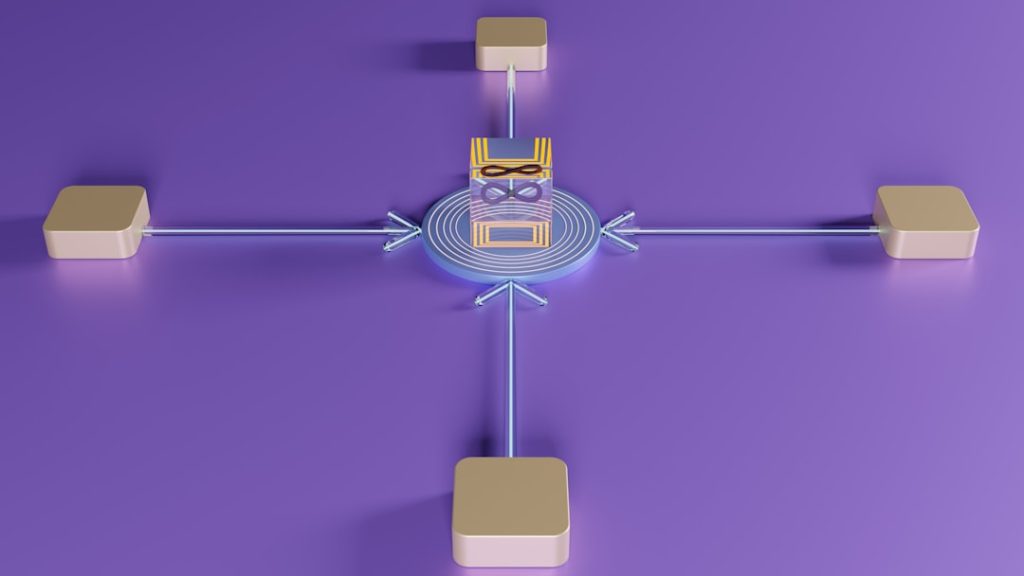
Retrieval-Augmented Generation (RAG) has rapidly become a foundational pattern for building intelligent, AI-powered search applications. By combining large language models (LLMs) with external knowledge retrieval systems, RAG enables accurate, context-aware responses grounded in real data. Organizations adopting RAG are moving beyond simple keyword search toward systems that reason over trusted knowledge sources. Choosing the right RAG framework tools is therefore a strategic decision that affects scalability, reliability, and long-term performance.
TLDR: RAG frameworks combine information retrieval with large language models to power advanced AI-driven search systems. The right tools help manage document ingestion, vector storage, query orchestration, and response generation. Leading frameworks provide modular pipelines, integration flexibility, and scalability for enterprise needs. Careful tool selection ensures accuracy, transparency, and performance in production environments.
At its core, a RAG system retrieves relevant data from a knowledge base and feeds it into an LLM to generate a contextually grounded answer. Rather than relying solely on a model’s training data, RAG ensures responses are informed by up-to-date, domain-specific content. This structure makes it ideal for enterprise search, customer support systems, research platforms, legal discovery tools, and internal knowledge assistants.
Core Components of a RAG Architecture
Before exploring specific tools, it is essential to understand the architectural layers that RAG frameworks typically address:
- Data Ingestion: Importing and preprocessing documents from diverse sources.
- Chunking and Embedding: Splitting content into manageable segments and converting them into vector embeddings.
- Vector Storage: Storing embeddings in a searchable vector database.
- Retrieval Logic: Identifying relevant document chunks based on semantic similarity.
- Generation Layer: Feeding retrieved context into an LLM to synthesize a response.
- Orchestration and Monitoring: Managing the pipeline and ensuring quality control.
Different RAG frameworks provide varying levels of abstraction across these components. Some prioritize ease of use and rapid prototyping, while others emphasize flexibility and production robustness.

Leading RAG Framework Tools
1. LangChain
LangChain is one of the most widely adopted RAG development frameworks. It offers modular building blocks for document loaders, embedding models, retrievers, and LLM integrations.
Key strengths include:
- Extensive integrations with vector databases and LLM providers
- Composable chains for complex workflows
- Built-in tools for memory and conversational agents
- Active community support and rapid updates
LangChain is particularly useful for teams that need flexibility and experimentation capabilities. However, its abstraction layers may sometimes require careful configuration for optimal production performance.
2. LlamaIndex
LlamaIndex focuses specifically on connecting LLMs with external data sources. It simplifies indexing and retrieval logic, making it especially appealing for developers building knowledge-based assistants.
Core advantages:
- Intuitive document indexing workflows
- Support for structured and unstructured data sources
- Advanced retrieval strategies such as hybrid and graph-based search
- Tight integration with vector stores
LlamaIndex excels when fast deployment and sophisticated retrieval logic are priorities. It abstracts much of the complexity involved in chunking and indexing pipelines.
3. Haystack
Haystack is a production-ready framework designed for building search systems and question-answering pipelines. It supports both traditional search techniques and neural retrieval methods.
- End-to-end pipelines with clear component structure
- Support for Elasticsearch and vector databases
- Robust evaluation tooling
- Enterprise-oriented design philosophy
Organizations seeking mature deployment strategies often prefer Haystack because of its emphasis on maintainability and scalability.
Vector Databases: The Retrieval Backbone
The vector database is a critical part of any RAG framework. It enables semantic search by storing high-dimensional embeddings and performing nearest-neighbor similarity queries.
Popular vector database solutions include:
- Pinecone: Managed, scalable vector search infrastructure.
- Weaviate: Hybrid search with semantic and keyword capabilities.
- Milvus: Open-source vector database for large-scale deployment.
- Chroma: Lightweight and developer-friendly vector store.
- FAISS: High-performance similarity search library.
Selection depends on data scale, latency requirements, and operational constraints. For enterprise-grade AI search, horizontal scalability and high availability are often decisive factors.

Retrieval Optimization Techniques
Effective retrieval is not simply about storing embeddings. High-quality RAG systems employ optimization strategies to improve answer relevance and factual grounding.
Hybrid Search
Hybrid search combines traditional keyword search (BM25) with semantic vector search. This dual approach improves recall and precision, particularly in domains where exact terminology matters.
Re-ranking Models
Re-ranking models evaluate retrieved documents and reorder them to enhance contextual alignment with the user’s query. Cross-encoders are often used to refine top candidate results.
Context Compression
Since LLMs operate within token limits, frameworks often implement summarization or relevance filtering to reduce context size without sacrificing meaningful information.
Metadata Filtering
Enterprise search systems frequently rely on metadata (such as document date, region, or department) to narrow retrieval scope and enhance compliance.
Evaluation and Observability Tools
A serious RAG deployment must include evaluation tools. Without systematic measurement, hallucination risks and incomplete retrieval can undermine trust.
Key evaluation practices include:
- Groundedness scoring
- Retrieval relevance metrics (precision and recall)
- Answer faithfulness assessments
- Human-in-the-loop feedback loops
Emerging observability tools allow teams to monitor query performance, latency, and answer quality in production. Logging prompt inputs, retrieved documents, and final responses is essential for debugging and compliance audits.
Scalability and Infrastructure Considerations
AI-powered search systems must scale across growing datasets and increasing query loads. Framework tools should therefore support:
- Asynchronous processing for ingestion pipelines
- Distributed vector indexing for high-volume data
- Autoscaling inference endpoints for LLM calls
- Caching mechanisms to reduce repeated inference costs
Additionally, organizations must consider data privacy regulations and secure deployment models, such as on-premises or virtual private cloud configurations.

Best Practices for Selecting RAG Tools
Given the growing ecosystem, tool selection should be guided by structured evaluation rather than popularity alone.
Recommended decision criteria:
- Modularity: Does the framework allow interchangeable components?
- Integration ecosystem: Are vector stores and LLMs easily switchable?
- Performance benchmarks: Are there proven case studies?
- Operational maturity: Does the framework support logging and monitoring?
- Community or vendor support: Is long-term maintenance sustainable?
For startups, rapid prototyping capabilities may be the priority. For enterprises, observability, compliance, and scaling capacity become stronger considerations.
Challenges in RAG System Development
Despite its advantages, RAG is not without challenges:
- Hallucinations: Even grounded models may produce speculative output.
- Retrieval mismatch: Poor indexing strategies can lead to irrelevant context.
- Cost management: Repeated embedding and inference operations incur expense.
- Latency constraints: Multi-step pipelines may slow response times.
Mitigating these risks requires systematic optimization, monitoring, and iterative refinement.
The Future of RAG Frameworks
RAG frameworks are evolving toward more autonomous systems with intelligent query planning, adaptive retrieval strategies, and multi-step reasoning capabilities. Integration with knowledge graphs and structured databases is becoming increasingly common. Furthermore, tool ecosystems are converging toward unified platforms that incorporate evaluation, deployment, and lifecycle management.
As AI-powered search matures, competitive advantage will increasingly depend on how effectively organizations combine data quality, retrieval precision, and generation reliability. Framework tools are no longer optional utilities—they are strategic infrastructure components.
Conclusion
RAG frameworks represent a powerful advancement in AI-powered search technology. By integrating retrieval mechanisms with generative models, they deliver grounded, relevant, and context-rich answers. Tools such as LangChain, LlamaIndex, Haystack, and leading vector databases provide the foundation for scalable implementations.
Building a reliable RAG system requires careful architectural planning, retrieval optimization, evaluation discipline, and infrastructure foresight. When designed and deployed responsibly, RAG-powered search systems offer substantial value across industries—enhancing productivity, improving knowledge accessibility, and redefining how users interact with information.
