
Top 5 Reasons Fortnite Reload Might Be Ending
Fortnite Reload arrived as a fast-paced twist on the traditional battle royale formula, offering players a condensed map, quick respawns, and non-stop action. For many fans, it felt like a nostalgic return to classic Fortnite while still embracing modern mechanics. Yet, recent developments and community chatter have sparked speculation that Fortnite Reload might be nearing its end. While Epic Games has not officially confirmed anything, several signs suggest that the mode’s future could be uncertain.
TLDR: Fortnite Reload may be ending due to declining player engagement, shifting development priorities, limited competitive integration, monetization challenges, and Epic Games’ focus on larger ecosystem expansions. While the mode remains popular with a dedicated audience, signs point toward a possible sunset or major overhaul. If it does disappear, it will likely be part of a broader strategy rather than a sudden shutdown. Fans should keep an eye on official announcements as Fortnite continues to evolve.
1. Declining Player Engagement Over Time
One of the most common reasons limited or experimental modes fade away is a gradual drop in player numbers. While Fortnite Reload debuted with impressive engagement, hype-driven launches often see inflated participation that naturally declines over time.
Several indicators may point to decreasing engagement:
- Longer matchmaking queues during off-peak hours
- Reduced promotional visibility within the Fortnite client
- Fewer content updates tailored specifically to Reload
- Lower streaming coverage compared to launch week
In a live-service ecosystem as massive as Fortnite, Epic constantly evaluates where players spend their time. When compared to core Battle Royale, Zero Build, Creative maps, LEGO Fortnite, Rocket Racing, and Fortnite Festival, Reload may struggle to maintain a dominant share of engagement.
Image not found in postmetaAdditionally, casual players often experiment with new modes but return to familiar favorites after the novelty fades. If Reload hasn’t consistently retained newcomers, Epic might view it as better suited for seasonal rotation rather than permanent placement.
2. Epic’s Expanding Ecosystem Demands Focus
Fortnite is no longer just a battle royale—it has evolved into a multiverse-style platform. With major additions like LEGO Fortnite, music-driven Festival mode, and racing experiences, Epic’s development resources are spread thinner than ever.
Maintaining Fortnite Reload requires:
- Balance adjustments
- Bug fixes
- Loot pool updates
- Map optimization
- Event integration
Each of these areas demands consistent development attention. If Epic determines that Reload does not generate enough return in engagement or revenue, those resources might be redirected to larger-scale integrations that support the company’s long-term strategy.
In recent seasons, Epic has clearly leaned toward building Fortnite as a persistent digital ecosystem rather than a collection of standalone modes. Experiences that tie into cross-brand collaborations or user-generated content initiatives may take priority over smaller, contained playlists like Reload.
3. Limited Competitive Integration
Competitive longevity often keeps game modes alive well beyond their initial hype. Standard Battle Royale and Zero Build thrive in part because of tournaments, ranked play, and esports visibility.
Fortnite Reload, however, has faced challenges in competitive adaptation:
- Faster pacing may reduce strategic depth
- Respawn mechanics complicate traditional scoring systems
- Smaller maps create unpredictable end-game scenarios
- Balancing skill expression becomes more difficult
If a mode lacks a strong competitive pipeline, it loses one of the most powerful engines for sustained relevance. Streamers, esports organizations, and high-skill players often anchor a mode’s long-term popularity.
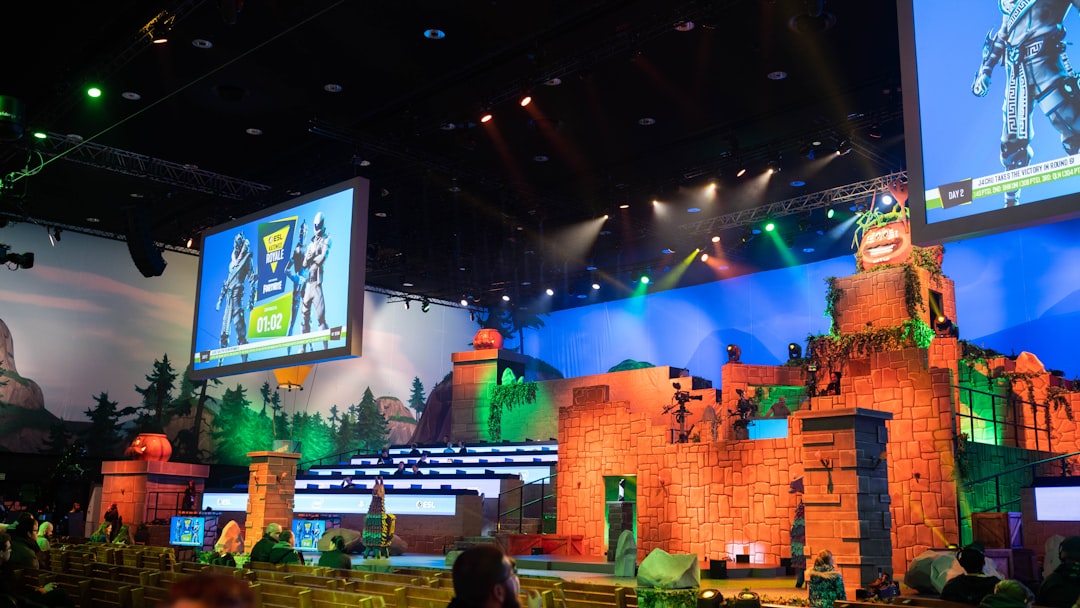
Without major tournaments or integration into Fortnite’s ranked ecosystem, Reload risks becoming viewed primarily as a casual or warm-up playlist. While there’s nothing wrong with that identity, it does make the mode more vulnerable when Epic reevaluates its lineup.
4. Monetization and Event Synergy Challenges
Fortnite’s live-service model depends heavily on cosmetic sales, battle passes, and event-driven purchases. Modes that fully support these cycles are far more likely to endure.
Here’s a comparison of how core modes typically integrate monetization and engagement systems:
| Feature | Battle Royale | Zero Build | Fortnite Reload |
|---|---|---|---|
| Battle Pass Integration | Fully Integrated | Fully Integrated | Partially Integrated |
| Seasonal Map Changes | Major Updates | Major Updates | Limited Adjustments |
| Live Events Impact | High | High | Low to Moderate |
| Competitive Events | Strong Presence | Growing | Minimal |
While Reload does support cosmetic usage and XP progression, it may not serve as the centerpiece for explosive live events or narrative arcs. Epic’s largest in-game moments—concerts, map destructions, seasonal storyline shifts—rarely revolve around smaller side modes.
If Reload cannot anchor large-scale monetized events, it may be treated as supplementary content instead of core infrastructure. In a business-driven environment, that distinction matters.
5. Rotation Strategy Instead of Permanent Status
Another possibility is that Fortnite Reload isn’t “ending” permanently but transitioning into a rotating mode. Epic has frequently cycled Limited Time Modes (LTMs) in and out to maintain freshness.
Rotational strategy benefits include:
- Scarcity-driven hype when a mode returns
- Reduced maintenance burden
- Cleaner playlist management
- Data-driven scheduling based on demand spikes
Fortnite has experimented with vaulting and unvaulting weapons, maps, and mechanics to generate renewed excitement. Applying that same philosophy to Reload would not be unprecedented.
By pulling Reload from permanent rotation, Epic could preserve its nostalgic appeal and prevent fatigue. Overexposure can cause even popular modes to feel stale. A strategic pause can sometimes extend longevity rather than cut it short.
Additional Factors Worth Considering
Beyond the primary five reasons, several secondary dynamics may influence Reload’s future:
- Server performance priorities during major crossover events
- Player fragmentation across too many active playlists
- Creative 2.0 growth enabling community-made alternatives
- Shifting demographic preferences toward sandbox experiences
Creative mode in particular represents an interesting wildcard. If creators design maps that replicate Reload’s pacing—perhaps with even more customization—Epic may prefer spotlighting community innovation rather than maintaining a first-party equivalent.
What Would an Ending Actually Look Like?
If Fortnite Reload were to end, it likely wouldn’t be abrupt. Epic typically follows a structured approach:
- Reduced promotional emphasis
- Fewer dedicated patch notes
- Announcement labeling it as a limited-time experience
- Official sunset date or rotation notice
Players would probably receive advance notice, giving the community time to celebrate the mode’s highlights. Epic has historically handled content vaulting with transparency, especially for popular features.
Moreover, gameplay innovations from Reload—such as tighter map design and quick respawn pacing—could be absorbed into future modes. Even if the label disappears, the DNA might live on.
The Bigger Picture: Evolution, Not Failure
It’s important to emphasize that an ending doesn’t necessarily equal failure. Fortnite’s identity has always been rooted in constant reinvention. Entire maps have vanished. Core mechanics have shifted dramatically. Even building once faced existential debate before Zero Build emerged.
Change is Fortnite’s most consistent feature.
If Reload does conclude, it may simply reflect the game’s adaptive life cycle. Epic experiments, gathers data, refines ideas, and reallocates resources accordingly. Some experiences become pillars. Others become stepping stones.
Could Community Demand Save It?
Fortnite has reversed decisions before in response to overwhelming community feedback. Weapon unvaults, mode returns, and balance changes have all been heavily influenced by player sentiment.
If players truly rally behind Reload—through social media campaigns, consistent playtime spikes, and creator advocacy—Epic may find incentive to preserve or evolve it rather than retire it.
Live-service games thrive on community engagement metrics. Strong player data combined with vocal passion can reshape internal roadmaps.
Final Thoughts
Fortnite Reload stands at an interesting crossroads. Whether it’s ending permanently, preparing for rotation, or simply entering a quieter maintenance phase, the signs suggest some form of transition may be on the horizon.
The five key factors—declining engagement, ecosystem expansion, limited competitive integration, monetization limitations, and strategic rotation logic—offer plausible explanations for why Epic might sunset or sideline the mode.
Still, Fortnite’s history shows that nothing is ever truly gone forever. In a game defined by constant evolution, today’s farewell can easily become tomorrow’s triumphant return.
For players who love the intensity and nostalgia of Reload, the best move right now is simple: play it, support it, and stay tuned. In Fortnite’s ever-shifting world, the next chapter is always just a patch away.
