
What Is Waxillgro279? Exploring the Code Behind Emerging Digital Systems

As the digital infrastructure around the world continues to evolve at a breakneck pace, the importance of decentralized protocols and next-gen system coding languages cannot be overstated. Among these rising technologies, a curious yet increasingly relevant term has emerged in tech circles: Waxillgro279. Whether it’s being discussed in development forums or cropping up in blockchain and AI documentation, this mysterious digital enabler is quietly making waves.
TLDR:
Waxillgro279 is an experimental protocol and system code architecture aimed at supporting emerging technologies such as decentralized AI, modular computing, and quantum-safe environments. Developed quietly by independent researchers and coders over the past few years, it introduces a unique hybrid framework for resource optimization and task decentralization. Though not mainstream yet, it shows potential to streamline the scalability of digital ecosystems. Currently, it serves as a backbone for some experimental blockchain subnets and next-gen AI data sharding platforms.
Understanding the Essence of Waxillgro279
Waxillgro279 is not a standard programming language nor a singular application; instead, it is better understood as a modular framework and a code pattern designed to support the agility of digital environments. At its core, it combines elements of:
- Distributed ledger architecture
- Post-quantum cryptography
- Polymorphic task switching
- Semantic code mapping
These features are intended to enhance the interoperability and resilience of systems that must scale within a rapidly changing digital landscape. Waxillgro279 thrives in environments where microservices, smart contracts, and decentralized compute nodes need to communicate efficiently and securely.
The Origins and Development
The genesis of Waxillgro279 dates back to early 2021, when a cohort of developer-cryptographers came across persistent issues in performance and security in blockchain-adjacent ecosystems. Initially designed as a side protocol to reduce latency in inter-chain communication, it rapidly developed into a unique code base that offered robust solutions to problems like data identity resolution, cycle optimization, and AI-to-AI negotiation layers.

The “279” suffix in Waxillgro279 refers to the initial working group’s sequence code — the 279th documented iteration of their simulation cycles. No official whitepaper exists, but detailed pseudocode and function documentation have been shared in open-source platforms such as GitHub and CodeShareX.
Why Waxillgro279 Matters
At a glance, Waxillgro279 may seem like another niche development in the crowded landscape of emerging protocols. But on closer inspection, it offers several transformative features:
- Quantum Resilience: Leveraging hybrid encryption models that combine traditional elliptic curve methods with lattice-based cryptography.
- Low-Resource Overhead: Offers strong performance with minimal computation, making it ideal for edge devices and IoT systems.
- Adaptive Algorithmic Learning: Allows AI agents to recalibrate workflows in real time based on cross-protocol benchmarks.
- Plug-in Compatibility: Integrates with popular toolchains like Rust, Go, Solidity, and emerging DSLs (Domain Specific Languages).
These traits cater directly to modern digital systems that must perform under uncertainty or across volatile compute environments.
System Architecture and Syntax
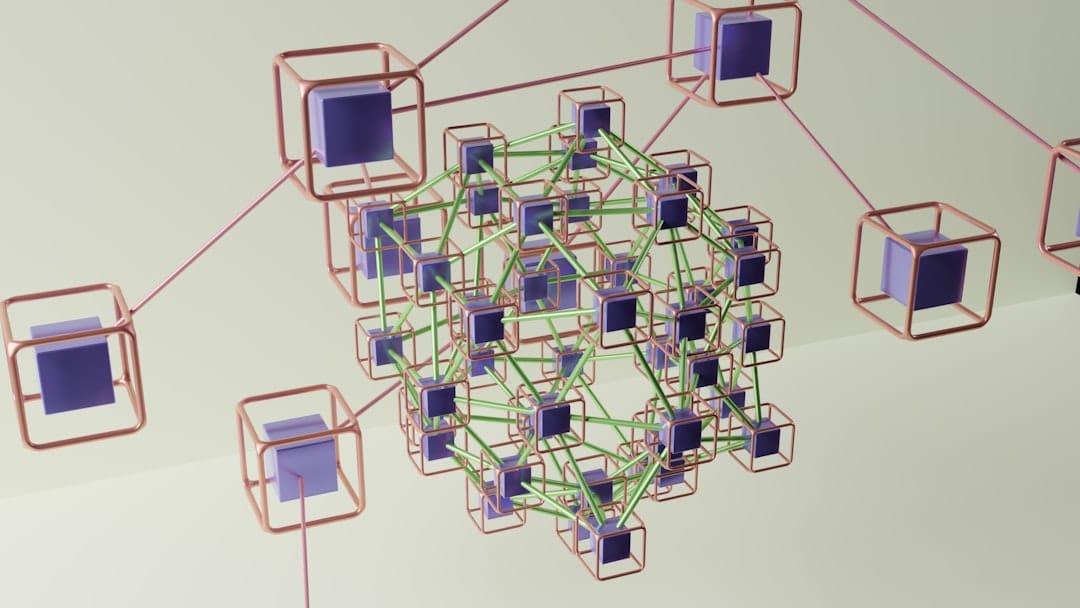
Waxillgro279 isn’t programmed in a conventional language like Python or JavaScript. Instead, it operates via a hybrid syntax composed of:
- Spinal patterns – abstracted data flow maps guiding how data travels between nodes.
- Skein objects – lightweight, mutable containers which respond to system stimulus.
- PulseTicks – multithreaded cycles that automate dynamic task reallocation.
This framework provides a way to run dynamic multi-agent simulations with built-in resistance to various forms of data distortion or logic corruption.
Applications in the Real World
Although still in its infancy in terms of adoption, Waxillgro279 has been implemented in several experimental platforms:
- BlockBreathe – A high-throughput blockchain simulator using Waxillgro279 for dynamic node orchestration.
- Q-Lattice.ai – A decentralized project that employs it for inter-AI negotiation when resources become constrained.
- MetaRoots – A file integrity network checking deep-qubit chain dependencies where standard hash systems fail.
In each project, what stands out is the code base’s extreme composability: developers can add, remove, or alter modules in real-time without crashing the system or losing state fidelity.
Community and Future Developments
The user base for Waxillgro279 is small but deeply committed. A community-driven consortium known as WaxCore maintains ongoing development, toolkits, and documentation. There’s talk of an upcoming official compiler, rumored to be named GroVault, aimed at making the system more accessible to wider developer audiences.
Future potential for Waxillgro279 includes use in:
- Federated medical data storage with fine-grained cryptographic access gates.
- Interstellar data communication protocols being tested by space science startups.
- Digital twin coordination engines for smart cities and intelligent infrastructure mapping.
Innovation Through Abstraction
The core philosophy behind Waxillgro279 can be summed up as “innovation through abstraction.” By abstracting away system-level constraints and allowing AI, blockchain, and quantum systems to ‘converse’ in a syntactically fluid medium, the protocol might serve as a digital lingua franca for the systems of tomorrow.
Despite its abstract nature, those who’ve used Waxillgro279 praise its modularity, security, and elegance, often comparing its role in future computing to what TCP/IP was for the internet: largely invisible, but foundational.
FAQ: Frequently Asked Questions
-
Q: Is Waxillgro279 a programming language?
A: No, it’s best understood as a modular code framework or protocol architecture built to support digital systems like AI, IoT, and blockchain. -
Q: Where can I start using Waxillgro279?
A: Advanced users can access experimental repositories on GitHub via the WaxCore community. It’s recommended only for those with a deep understanding of system-level protocols and cryptographic functions. -
Q: Does Waxillgro279 support smart contracts?
A: Yes, through auxiliary binders and protocol layers, Waxillgro279 can efficiently host and process smart contracts within customizable consensus frameworks. -
Q: How does it compare to traditional blockchain?
A: While traditional blockchains focus on data immutability and consensus, Waxillgro279 emphasizes dynamic system actions and polymorphic task management, offering more flexibility for hybrid environments. -
Q: Is Waxillgro279 secure against quantum threats?
A: Yes, it’s designed with quantum-safe algorithms including lattice-based cryptography and modular rotations suited for future quantum computing environments.
In conclusion, Waxillgro279 may still be under the radar for many developers today, but its potential for reshaping the digital landscape cannot be ignored. As we edge closer to a converged era of quantum AI, smart infrastructure, and decentralized governance, wax-like protocols such as this one might provide the glue holding it all together.
