
SOA OS23: A Modern Perspective on Service
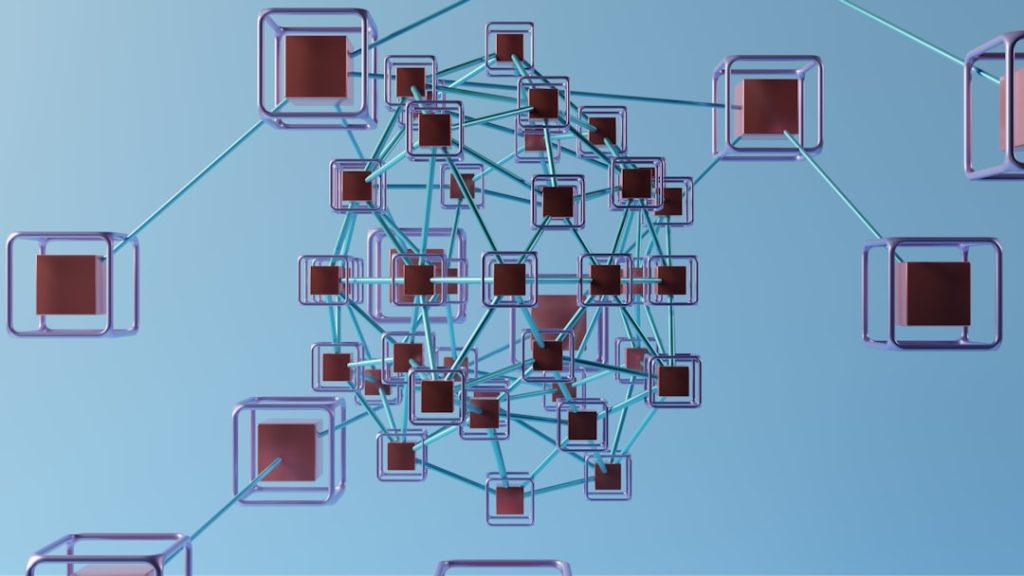
Service Oriented Architecture (SOA) has evolved significantly over the past two decades, adapting to shifting technological landscapes, cloud-native ecosystems, and increasing demands for scalability. The emergence of SOA OS23 represents a refined, modern perspective on service-based architecture—one that integrates contemporary infrastructure practices, security expectations, and distributed design principles. Rather than replacing traditional SOA, OS23 reinterprets and strengthens it, ensuring that service orientation remains relevant in an era dominated by microservices, APIs, and hybrid cloud strategies.
TLDR: SOA OS23 modernizes traditional Service Oriented Architecture by aligning it with cloud-native principles, API-first strategies, and advanced governance models. It emphasizes interoperability, resilience, automation, and security while maintaining the core philosophy of loosely coupled services. Organizations adopting SOA OS23 benefit from scalable, modular systems that support long-term digital transformation. In essence, it is a disciplined evolution of SOA, not a departure from it.
A Historical Context: From Classic SOA to OS23
Traditional SOA emerged as a structured method for organizing enterprise systems into reusable, loosely coupled services. Early implementations focused heavily on SOAP-based web services, enterprise service buses (ESBs), and centralized orchestration. While powerful, these systems often became complex and rigid, struggling to keep pace with rapidly evolving business needs.
SOA OS23 acknowledges these challenges and addresses them directly. It adopts lessons learned from:
- Microservices architecture, emphasizing decentralized service ownership.
- Cloud-native engineering, enabling elastic scalability and container deployment.
- API-first development, promoting clearer contracts and interoperability.
- DevOps automation, accelerating deployment cycles.
Rather than discarding foundational SOA principles, OS23 refines them. The core philosophy remains intact: services should be loosely coupled, reusable, discoverable, and interoperable. What changes is the infrastructure, governance, and tooling surrounding them.

Core Principles of SOA OS23
At its core, SOA OS23 stands on five foundational pillars designed to support modern enterprise environments:
1. Service Modularity with Clear Contracts
Services must deliver clearly defined business capabilities. APIs serve as explicit contracts, typically described in standardized formats. This ensures compatibility across diverse technology stacks and geographic boundaries.
2. Cloud-Aware Deployment
SOA OS23 assumes services run in elastic environments. Containers, serverless functions, and orchestration platforms allow systems to scale dynamically based on workload demands.
3. Event-Driven Communication
While traditional SOA often relied on synchronous interactions, OS23 integrates asynchronous messaging and event-driven design. This enhances resilience and reduces tight coupling between services.
4. Built-In Security and Compliance
Modern service architecture cannot treat security as an afterthought. OS23 embeds identity management, authorization, encryption, and audit logging directly into its service governance model.
5. Observability and Resilience
Distributed systems introduce complexity. Therefore, monitoring, tracing, and automated recovery mechanisms are fundamental components of the architecture.
Architectural Components in Detail
To understand SOA OS23 fully, one must examine its structural components. Although implementations vary, a modern stack typically includes:
- API Gateway: A front-facing interface managing routing, throttling, and authentication.
- Service Registry: Enabling dynamic discovery of service endpoints.
- Message Broker: Supporting event-driven workflows and asynchronous processing.
- Identity Provider: Centralized authentication and authorization.
- Monitoring and Logging Stack: Delivering observability across distributed services.

The integration of these elements ensures cohesion without reintroducing the rigidity that hampered early SOA implementations. Importantly, OS23 discourages over-centralization. Governance is structured but not obstructive; automation replaces manual controls whenever possible.
Governance Reimagined
Governance was historically one of SOA’s most controversial aspects. Excessive oversight often slowed innovation. SOA OS23 adopts a more balanced model:
- Policy as Code: Policies are automated and version-controlled.
- Automated Compliance Checks: Continuous validation replaces periodic audits.
- Decentralized Ownership: Teams retain accountability for their services.
- Defined Lifecycle Management: Services progress through controlled stages from development to deprecation.
This approach ensures consistency while supporting agility. Instead of functioning as a bottleneck, governance becomes an enabler of reliability and security.
SOA OS23 and Microservices: Complementary, Not Competing
It is a common misconception that SOA and microservices are mutually exclusive. In reality, SOA OS23 incorporates microservice principles within a broader enterprise framework. The distinction lies primarily in scope and governance.
Microservices focus on small, independently deployable components. SOA OS23, by contrast, ensures that services—regardless of size—align with enterprise-wide standards, interoperability policies, and long-term strategic vision.
This complementary relationship offers several advantages:
- Enterprise-wide consistency without sacrificing flexibility.
- Improved integration across legacy and modern applications.
- Reduced technical debt through standardized communication protocols.
Security in the OS23 Era
The cybersecurity threat landscape has evolved significantly. As services communicate across cloud boundaries and hybrid infrastructures, attack surfaces expand. SOA OS23 responds by embedding security into every layer of the architecture.
Key security characteristics include:
- Zero Trust Architecture principles.
- Token-based authentication and authorization.
- Service-to-service encryption.
- Continuous vulnerability scanning.
Security becomes continuous rather than reactive. Automated alerts and monitoring systems ensure that anomalies are detected in real time, minimizing potential disruptions.

Practical Benefits for Enterprises
Organizations adopting SOA OS23 often report tangible operational and strategic gains. These benefits extend beyond IT departments and influence overall business performance.
Operational Efficiency
Automated deployments and elastic scaling reduce infrastructure waste. Teams can focus on delivering business value rather than managing manual configurations.
Improved Time to Market
Reusable services and standardized APIs accelerate application development cycles. Cross-functional teams collaborate more effectively using shared architectural guidelines.
Enhanced Reliability
With event-driven mechanisms and fault isolation, system failures are contained rather than catastrophic. Services degrade gracefully instead of collapsing entirely.
Strategic Flexibility
Modularity allows organizations to integrate emerging technologies—such as AI services or edge computing—without redesigning their entire infrastructure.
Implementation Considerations
Despite its advantages, implementing SOA OS23 requires careful planning. Enterprises should approach migration with a structured roadmap:
- Conduct a comprehensive audit of existing systems.
- Identify core business capabilities suitable for service encapsulation.
- Define standardized API contracts and communication protocols.
- Introduce automation pipelines and CI/CD processes.
- Gradually decompose monolithic applications where appropriate.
Change management also plays a crucial role. Cultural adaptation toward decentralized ownership and DevOps practices often determines the success of architectural transformation initiatives.
Challenges and Realistic Expectations
No architectural model is without challenges. SOA OS23 introduces sophistication that can overwhelm teams unprepared for distributed system complexity. Monitoring, debugging, and governance automation require advanced tooling and expertise.
Additionally, transitioning from legacy systems may reveal hidden dependencies. Careless decomposition can fragment data consistency or degrade performance if not managed properly.
Organizations must therefore maintain realistic expectations. SOA OS23 is not a quick fix; it is a strategic investment that yields long-term resilience and adaptability.
The Future Outlook
Looking ahead, SOA OS23 is well-positioned to support emerging innovations. As enterprises adopt artificial intelligence, Internet of Things networks, and edge computing, a flexible service-based approach becomes indispensable.
The architecture’s emphasis on interoperability ensures compatibility with third-party platforms and partner ecosystems. Meanwhile, built-in scalability accommodates unpredictable workloads, particularly in data-intensive industries.
In many respects, SOA OS23 represents the natural maturation of service orientation. It integrates best practices from multiple architectural paradigms while preserving the disciplined structure enterprises require.
Conclusion
SOA OS23 offers a credible, structured, and forward-looking framework for enterprise architecture. It captures the clarity and modularity of classic SOA while embedding the agility, automation, and security expected in modern systems. By balancing centralized governance with decentralized execution, it addresses previous shortcomings without abandoning proven principles.
For organizations navigating digital transformation, SOA OS23 provides more than a technical model—it offers a strategic foundation. Its disciplined emphasis on interoperability, resilience, and service reusability positions enterprises to thrive in complex and rapidly evolving environments. In this respect, SOA OS23 is not merely an update to an old paradigm; it is a modern reaffirmation of service as the cornerstone of sustainable system design.
