
4 Knowledge Graph Management Tools That Help You Analyze Complex Relationships
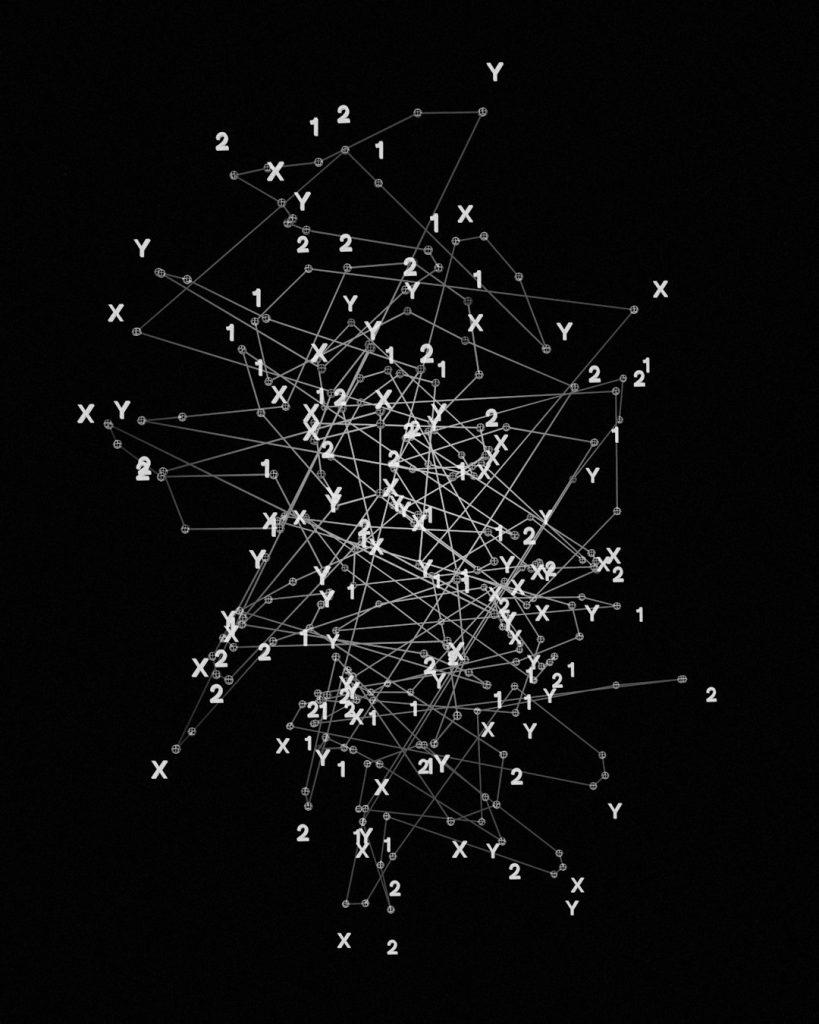
As organizations generate and collect unprecedented volumes of interconnected data, understanding the relationships between entities has become just as important as storing the data itself. From fraud detection and recommendation engines to supply chain optimization and biomedical research, knowledge graphs provide the structure needed to uncover hidden patterns. However, building and maintaining these graphs requires specialized platforms that can model, query, scale, and visualize complex relationships efficiently.
TLDR: Knowledge graph management tools help organizations model and analyze complex, highly connected data. Leading platforms such as Neo4j, Amazon Neptune, Stardog, and TigerGraph provide powerful querying languages, scalability, and visualization capabilities. Each tool serves slightly different needs, from enterprise-scale analytics to semantic reasoning. Choosing the right one depends on performance requirements, integration needs, and analytical depth.
Below are four knowledge graph management tools that stand out for their ability to help teams explore and analyze intricate data relationships.
1. Neo4j
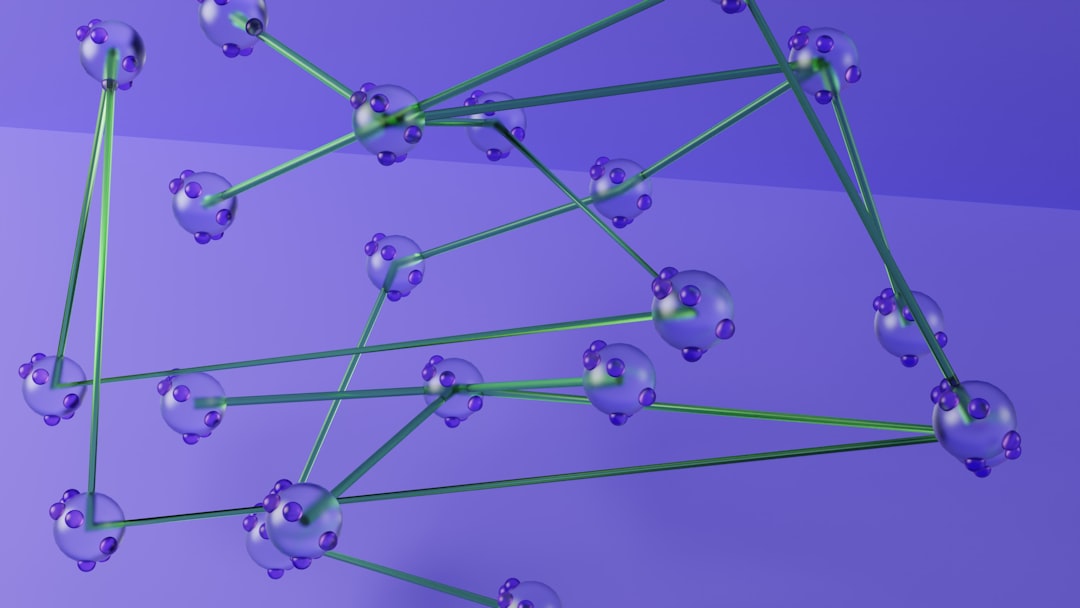
Neo4j is one of the most widely recognized graph database platforms. It is purpose-built for connected data and offers a native graph architecture that allows relationships to be stored directly rather than inferred through joins. This structure makes it particularly effective for applications involving social networks, fraud detection, recommendation systems, and pathfinding.
Key Features
- Native Graph Storage: Relationships are treated as first-class citizens, enabling fast traversal queries.
- Cypher Query Language: A user-friendly and expressive query language designed specifically for graph operations.
- Scalability: Supports clustering and high availability for enterprise use.
- Graph Data Science Library: Built-in algorithms for centrality, community detection, similarity, and more.
Neo4j excels in situations where query performance and developer productivity are critical. Its graph-native architecture allows users to explore multi-hop relationships in milliseconds, making it highly suitable for real-time applications. Additionally, its strong ecosystem and documentation lower the barrier to entry for teams new to graph technologies.
2. Amazon Neptune
Amazon Neptune is a fully managed graph database service provided by AWS. It supports both the Property Graph model (via Apache TinkerPop Gremlin) and the RDF model (via SPARQL), offering flexibility for various graph use cases.
Key Features
- Managed Service: Automated backups, patching, and scaling remove operational complexity.
- Multi-Model Support: Works with Gremlin and SPARQL, supporting both property graph and RDF frameworks.
- High Availability: Distributed storage and replication across multiple availability zones.
- AWS Integration: Seamless connectivity with services such as S3, Lambda, and IAM.
Neptune is particularly attractive to organizations already operating within the AWS ecosystem. Its managed infrastructure reduces DevOps overhead, allowing data teams to focus on analytics rather than maintenance. It is often used in fraud detection, knowledge management systems, and identity graph solutions.
For enterprises dealing with compliance-heavy environments or semantic web standards, Neptune’s RDF support can provide added value. However, teams seeking highly specialized graph analytics libraries may need to integrate additional services.
3. Stardog
Stardog is an enterprise knowledge graph platform that combines graph databases with semantic reasoning capabilities. It is particularly strong in scenarios requiring data integration and logical inference.
Key Features
- Semantic Reasoning: Built-in inference engine to derive new knowledge from existing data.
- Virtual Knowledge Graphs: Query distributed data sources without physically moving the data.
- SPARQL Support: Designed for RDF-based applications and linked data environments.
- Data Unification: Integrates structured and unstructured sources into a cohesive knowledge layer.
What differentiates Stardog is its focus on knowledge representation rather than just graph storage. It enables organizations to create ontologies that formally define business concepts and relationships. This capability is valuable in industries like healthcare, finance, and government, where compliance rules and domain taxonomies must be encoded directly into the data layer.
Because of its reasoning features, Stardog is often used in regulatory compliance systems, master data management, and enterprise knowledge hubs. Its ability to unify disparate datasets without replication significantly reduces data silos.
4. TigerGraph
TigerGraph is designed for high-performance, massively parallel graph analytics. It targets use cases that require deep link analytics at scale, such as telecommunications networks, cybersecurity, and supply chain optimization.
Key Features
- Native Parallel Graph Processing: Handles billions of nodes and edges efficiently.
- Real-Time Analytics: High-speed traversal across deep link structures.
- GSQL Query Language: SQL-like syntax tailored for graph computations.
- Built-In Algorithms: Pre-packaged analytics for fraud detection, recommendation, and risk analysis.
TigerGraph’s architecture allows for distributed storage and compute, enabling it to perform advanced analytics on extremely large datasets. This makes it suitable for mission-critical environments where speed and scale are non-negotiable.
Organizations that require heavy graph processing—such as analyzing billions of connections for anomaly detection—often consider TigerGraph due to its performance-focused design. However, its advanced capabilities may require specialized expertise for full optimization.
Comparison Chart
| Tool | Primary Strength | Query Languages | Best For | Deployment Model |
|---|---|---|---|---|
| Neo4j | Native graph performance and ease of use | Cypher | Real-time applications, recommendations, fraud detection | Self-managed and cloud options |
| Amazon Neptune | Fully managed AWS integration | Gremlin, SPARQL | Cloud-native enterprise systems | Managed cloud service |
| Stardog | Semantic reasoning and data unification | SPARQL | Compliance, ontology-driven knowledge graphs | Self-managed and enterprise cloud |
| TigerGraph | Massive parallel graph analytics | GSQL | Large-scale deep link analytics | Cloud and on-premise |
How to Choose the Right Knowledge Graph Tool
Selecting the most suitable platform depends on several factors:
- Scale Requirements: How large is the dataset and how deep are the relationships?
- Query Language Familiarity: Does the team have SPARQL, Gremlin, or Cypher expertise?
- Integration Needs: Will the graph integrate with existing cloud or enterprise systems?
- Reasoning Capabilities: Is logical inference required?
- Operational Preferences: Managed service or self-hosted infrastructure?
Organizations focused primarily on performance might lean toward TigerGraph or Neo4j. Those deeply integrated into AWS infrastructure often prefer Neptune. Enterprises requiring ontology-driven knowledge modeling frequently select Stardog.
Conclusion
Knowledge graphs have become essential for analyzing complex, interconnected datasets. As businesses seek deeper insights from relationships rather than isolated records, graph management platforms provide the structure and computational power required to uncover meaningful patterns.
Neo4j, Amazon Neptune, Stardog, and TigerGraph each offer distinct advantages, from semantic reasoning to real-time analytics at scale. By aligning technical requirements with the strengths of each platform, organizations can transform raw connected data into actionable intelligence.
Frequently Asked Questions (FAQ)
1. What is a knowledge graph management tool?
A knowledge graph management tool is a software platform that allows organizations to store, query, analyze, and visualize interconnected data using graph structures.
2. How is a graph database different from a relational database?
Graph databases store relationships directly between records, enabling faster traversal of connected data. Relational databases rely on joins, which can become inefficient for highly connected datasets.
3. What industries use knowledge graphs?
Industries such as finance, healthcare, e-commerce, telecommunications, cybersecurity, and government widely use knowledge graphs for fraud detection, recommendations, regulatory compliance, and network analysis.
4. Do knowledge graphs require coding expertise?
Yes, most platforms require familiarity with specialized query languages such as Cypher, SPARQL, Gremlin, or GSQL. However, many tools provide visualization interfaces to simplify exploration.
5. Can knowledge graphs integrate with AI systems?
Absolutely. Knowledge graphs often enhance AI models by providing structured context and explainable relationships, improving reasoning and decision-making capabilities.
