
Designing for the Digital Reality: Adobe Creative Suite Meets the Metaverse

The convergence of immersive virtual environments and professional design tools is no longer speculative—it is operational. As businesses, educators, and creators establish a presence inside persistent 3D digital spaces, the creative process must evolve to support new modes of interaction, storytelling, and commerce. Adobe Creative Suite—now more broadly integrated under Adobe Creative Cloud—sits at a unique crossroads of 2D, 3D, video, animation, and collaborative workflows. Designing for the metaverse demands not only aesthetic fluency, but also technical precision, spatial thinking, and system-level coordination.
TLDR: The metaverse is reshaping how designers create assets, experiences, and visual systems. Adobe Creative Cloud provides a comprehensive ecosystem for producing, animating, and optimizing immersive content for virtual worlds. By integrating 2D design, 3D modeling, motion graphics, and real-time collaboration, creative professionals can build scalable assets for digital environments. Successful metaverse design requires spatial thinking, cross-platform optimization, and a strong command of interoperable workflows.
The metaverse—an umbrella term for shared, persistent, and immersive virtual spaces—requires a fundamental rethinking of digital design. Instead of static visuals confined to screens, designers now produce interactive objects, spatial interfaces, and dynamic environments. Creative assets must function across devices, from VR headsets to desktop browsers and mobile augmented reality experiences. The challenge is not merely creating compelling graphics, but engineering adaptable building blocks for evolving ecosystems.
The Shift from Flat Design to Spatial Systems
Traditional design workflows focus largely on two-dimensional outputs: websites, advertisements, print media, or social content. The metaverse introduces volumetric depth, environmental lighting, physics simulations, and real-time interactivity. Designers must consider:
- Scale and proportion within immersive environments
- User perspective and navigational flow
- Material realism including texture and reflectivity
- Animation responsiveness triggered by user interaction
Adobe tools bridge these dimensions. Photoshop and Illustrator remain foundational for texture creation and vector assets, while Adobe Substance 3D enables the generation of realistic materials and 3D models. After Effects and Premiere Pro contribute motion systems, environmental storytelling elements, and immersive video layers.

Adobe Creative Cloud as an Integrated Metaverse Toolkit
Rather than operating as isolated tools, Adobe applications increasingly function as a connected ecosystem. Libraries synchronize assets. Cloud documents centralize revisions. Real-time collaboration allows distributed design teams to iterate simultaneously. For metaverse projects, this interoperability is critical.
Consider a typical immersive brand activation inside a virtual world:
- A concept artist develops environment sketches in Photoshop.
- Vector UI icons and navigational markers are created in Illustrator.
- 3D props and textures are generated and refined in Substance 3D Painter and Stager.
- Animated signage is developed in After Effects and exported as optimized assets.
- Promotional video previews are edited in Premiere Pro.
This synchronized pipeline ensures consistency in color systems, typography, lighting references, and branding elements across every digital touchpoint.
Comparison of Adobe Tools for Metaverse Design
| Tool | Primary Function | Metaverse Application | Strength |
|---|---|---|---|
| Photoshop | Raster graphics editing | Texture maps, environment backdrops, UI panels | Advanced layering and texture control |
| Illustrator | Vector design | Scalable interface icons, typography systems | Resolution-independent assets |
| Substance 3D | 3D modeling and material creation | Realistic objects, surfaces, digital merchandise | Physically based rendering materials |
| After Effects | Motion graphics and compositing | Interactive animations, holographic effects | Procedural animation control |
| Premiere Pro | Video editing | Immersive promotional content | Professional-grade sequencing |
| Aero | Augmented reality experiences | AR overlays bridging physical and digital worlds | No-code AR publishing |
The strength of this ecosystem lies in integration. Assets can move fluidly from 2D illustration to 3D deployment, preserving visual fidelity and accelerating iteration cycles.
Designing Immersive Brand Identities
Brand systems in the metaverse extend far beyond logos. They encompass architectural environments, interactive objects, avatar wearables, audio identities, and animated narratives. Adobe tools enable the creation of modular brand kits prepared for spatial adaptation.
For example, a retail brand building a virtual storefront must design:
- Architectural exteriors and interior layouts
- Digital product packaging in 3D
- Interactive signage and animated promotions
- Avatar-compatible merchandise
- Dynamic light and color schemes reflecting brand values
Each component must align visually and technically. Designers frequently build centralized Creative Cloud Libraries to maintain standardized typography, color palettes, and texture presets. This ensures that assets remain cohesive even when deployed across different virtual platforms.
Performance Optimization: The Invisible Discipline
Immersive environments demand more than aesthetic excellence. Rendering constraints, file sizes, and frame rates directly influence user experience. Designers must collaborate closely with developers to optimize polygon counts, compress textures, and ensure compatibility with real-time engines.
Substance 3D’s physically based rendering workflows allow creators to simulate realistic materials while maintaining efficient performance profiles. Similarly, exporting assets in appropriate formats—such as USDZ or GLB—ensures interoperability across AR, VR, and browser-based platforms.
Best practices include:
- Reducing unnecessary vertex complexity
- Compressing high-resolution textures without visible degradation
- Testing assets under real-time lighting conditions
- Standardizing file naming and version control practices
High-performing immersive design is often invisible; users notice seamlessness more than technical precision. Yet that seamlessness depends on disciplined production workflows.
Motion and Interactivity as Design Fundamentals
In immersive environments, stillness is unnatural. Objects respond to gaze, proximity, gesture, or sound. Consequently, motion graphics and micro-interactions become structural components of design rather than ornamental additions.
After Effects plays a central role in prototyping animated behaviors—rotations, opacity shifts, particle effects, and transitions. These animations can then be exported into formats compatible with game engines or web-based metaverse platforms.
Designers must consider:
- Temporal pacing of user interactions
- Feedback cues confirming engagement
- Looping animations that avoid visual fatigue
- Accessibility implications of motion sensitivity
The shift toward experience-driven design places motion literacy on par with typography and layout expertise.
Collaborative Creation in Persistent Worlds
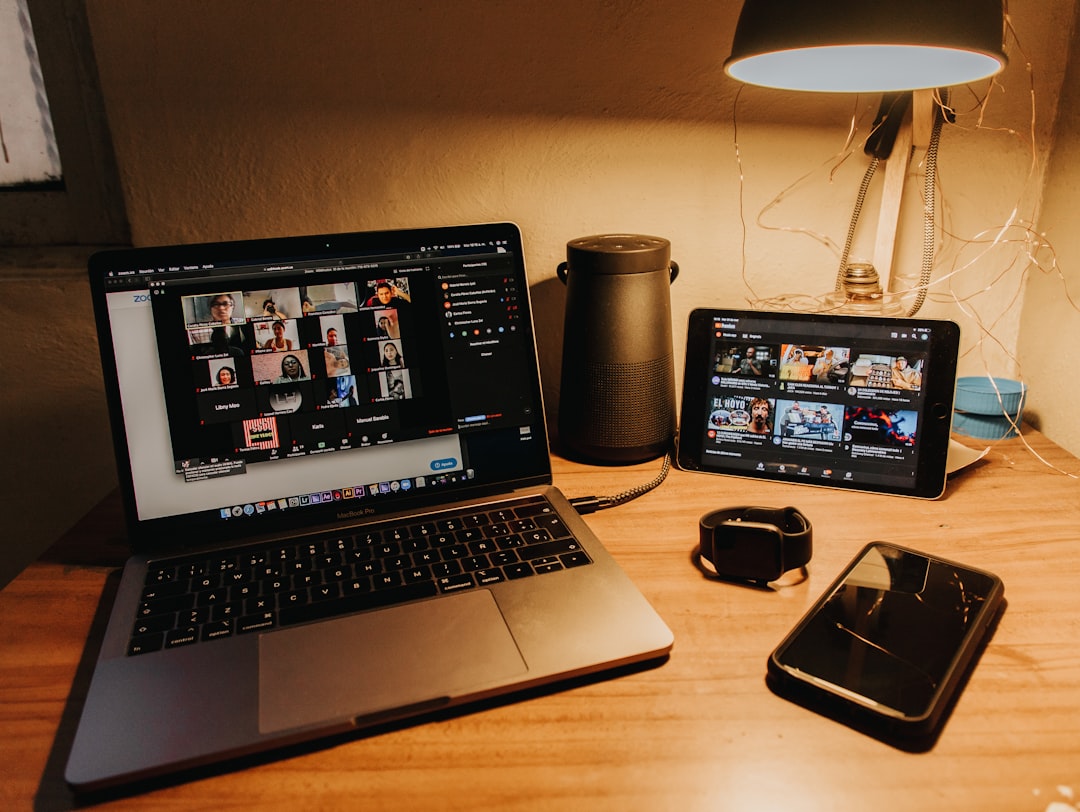
Metaverse environments evolve continuously. Unlike static campaigns, immersive spaces are persistent and often community-modified. Creative Cloud’s shared documents and cloud-based commenting systems enable ongoing updates without fragmenting asset management.
Distributed teams—including 3D modelers, UI designers, animators, and strategists—can:
- Share synchronized asset libraries
- Track revisions through version histories
- Rapidly prototype environmental variations
- Collect stakeholder feedback within cloud documents
This collaborative infrastructure aligns with the always-on nature of virtual worlds.
Ethical and Experiential Responsibility
Designing immersive environments carries ethical implications. Spatial design influences behavior, perception, and emotional state. Accessibility, representation, and user safety require deliberate attention. Adobe tools incorporate accessibility checks, color contrast analyzers, and inclusive design resources, supporting more responsible creative outcomes.
Designers must ask:
- Are virtual environments navigable for users with mobility limitations?
- Do avatars support diverse identities and expressions?
- Are visual effects compatible with neurodivergent audiences?
The metaverse’s immersive power heightens the designer’s responsibility. Decisions once confined to screen layouts now shape experiential realities.
The Path Forward
The intersection of Adobe Creative Cloud and metaverse development represents a natural evolution rather than a rupture. For decades, designers transitioned from print to web, from static imagery to motion, from desktop to mobile. The shift toward spatial computing and persistent digital worlds follows the same trajectory—demanding expanded technical fluency while preserving foundational design principles.
Typography, color theory, composition, narrative pacing, and user empathy remain central. What changes is context: assets must exist in three dimensions, respond dynamically, and integrate across platforms. Adobe’s ecosystem provides both continuity and expansion, empowering creative professionals to navigate this complexity with precision and coherence.
As immersive environments mature, organizations that invest in structured, tool-integrated workflows will be better positioned to deliver compelling, scalable experiences. Designers who master spatial thinking and leverage interoperable creative systems will shape not only digital interfaces, but digital realities themselves.
The metaverse is not merely a new channel—it is a new canvas. And with disciplined workflows, integrated tools, and responsible design practices, Adobe Creative Cloud stands as one of the most comprehensive platforms available for building that canvas with credibility and craft.
