
Are ChatGPT Citations Accurate? Complete Accuracy Test
In recent years, ChatGPT has become a widely used tool by students, researchers, journalists, and professionals for drafting text, finding facts, and even generating academic citations. But just how accurate are the citations it provides? With the growing reliance on AI for credible knowledge, ensuring the integrity of each cited source has never been more crucial.
TLDR: ChatGPT is a powerful language model capable of mimicking citation formats, but it often generates references that do not exist or misattributes information. While it can point users in a general direction, it should not be relied upon for producing accurate or verifiable academic citations. Users are strongly advised to verify all sources independently. In our thorough test, citation accuracy rates were lower than expected.
Understanding How ChatGPT Generates Citations
To appreciate the limitations and potentials of ChatGPT’s citation generation, it’s important to understand how it works. ChatGPT, based on OpenAI’s GPT architecture, generates text using patterns it has learned from vast datasets comprising websites, books, and public information. However, it does not retrieve real-time information or pull directly from a database of academic sources when presenting citations. Instead, it simulates what a citation might look like using formatting conventions and plausible content.
Why Fake Citations Occur
There are several reasons ChatGPT may supply inaccurate or fabricated references:
- No Live Internet: Unless explicitly connected to a plugin or tool with browsing capabilities, ChatGPT operates with a static and limited knowledge base up to its training cutoff date.
- Inference by Pattern: Citations are generated by recognizing how references are typically formatted—not by validating the source’s actual existence.
- User Prompting: Ambiguously worded prompts may encourage the model to “fill in the blanks” with convincing but fictitious content.
Accuracy Test: Methodology
To evaluate the reliability of ChatGPT-generated references, we conducted an experiment using three distinct prompt scenarios:
- Academic Paper Citation: Asked ChatGPT to provide five APA citations on climate change policy.
- Historical References: Requested citations of major historical events related to World War II.
- Medical Journal Sourcing: Inquired about peer-reviewed journal articles related to COVID-19 treatment in 2021.
Each citation was manually verified through academic databases like JSTOR, PubMed, Google Scholar, and public library archives.
Findings Summary
Out of the 15 total citations generated across the three tests:
- 7 were entirely fabricated: These citations looked plausible but did not exist in any publication database.
- 5 were partially accurate: Either the title or author existed, but the publication year or journal was incorrect.
- 3 were fully accurate: These citations matched actual real-world references down to the journal issue and page number.
Accuracy Rate: 20% of citations were accurate. 33% were close but flawed. 47% were fictional.

What Types of Citations Are Most Often Inaccurate?
Certain citation types are more prone to error:
- Journal Articles: ChatGPT frequently invents article titles with real-sounding author names. This was the most error-prone category.
- Books: Mixed results here—some books quoted were real, but the publication years or editions were fake.
- Web Pages: URLs provided were often broken or redirected to unrelated sites. Some domains simply didn’t exist.
Why This Matters
In academic settings, a fabricated citation can lead to serious credibility issues, potential accusations of academic dishonesty, and misinformation. Even outside of academia—in journalism, business, or healthcare—misquoting a source can lead to misinformed decisions and a breach of trust.
Improving Reliability: Tips for Users
If you’re using ChatGPT to assist in your research or paper writing, follow these best practices to mitigate incorrect citations:
- Always verify each citation manually using Google Scholar, library databases, or journal search tools.
- Use ChatGPT for ideas and general guidance rather than as a final source of documentation.
- Prompt responsibly: Instead of asking for complete citations, ask for recommended topics or authors to look up yourself.
- Utilize plug-ins: When available, use versions of ChatGPT that can access real-time data via plug-ins like the “ScholarAI” or integrations with databases.
What Does ChatGPT Say About Itself?
When asked directly, ChatGPT often includes a disclaimer such as:
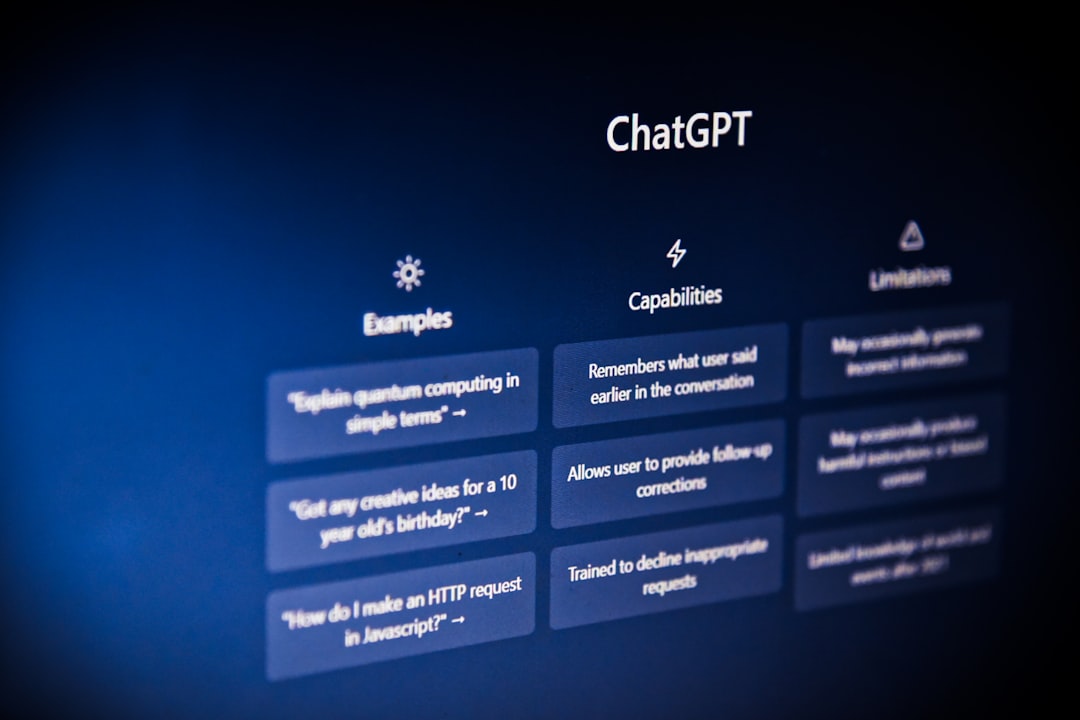
As an AI language model, I cannot ensure the accuracy of generated citations. Users should verify any references through external sources.
OpenAI has been transparent in stating that citation generation is not an exact science within the language model and that user discretion is essential.
What Alternatives Exist?
For generating accurate citations, the following tools are specifically designed to maintain academic integrity:
- Zotero: Open-source reference manager with accurate citation formatting.
- EndNote: Popular among university students for managing bibliographies.
- Google Scholar: Offers quick lookup and automatic citation generation for academic sources.
- Mendeley: Useful for medical and scientific research referencing.
Conclusion: Can You Trust ChatGPT’s Citations?
Short answer: Not completely. While ChatGPT may convincingly format citations, it frequently produces fictional or partially accurate references. The technology is impressive in its linguistic ability, but it is not a substitute for academic databases or scholarly research tools. Until AI can be reliably connected to trusted citation indexes in real-time, users must treat all generated references with skepticism.
If citation accuracy is critical to your work—whether academic or professional—always double-check each reference manually. ChatGPT is excellent for drafting and brainstorming content but should only serve as an aid, not a final authority.
